
Last updated November 21, 2026
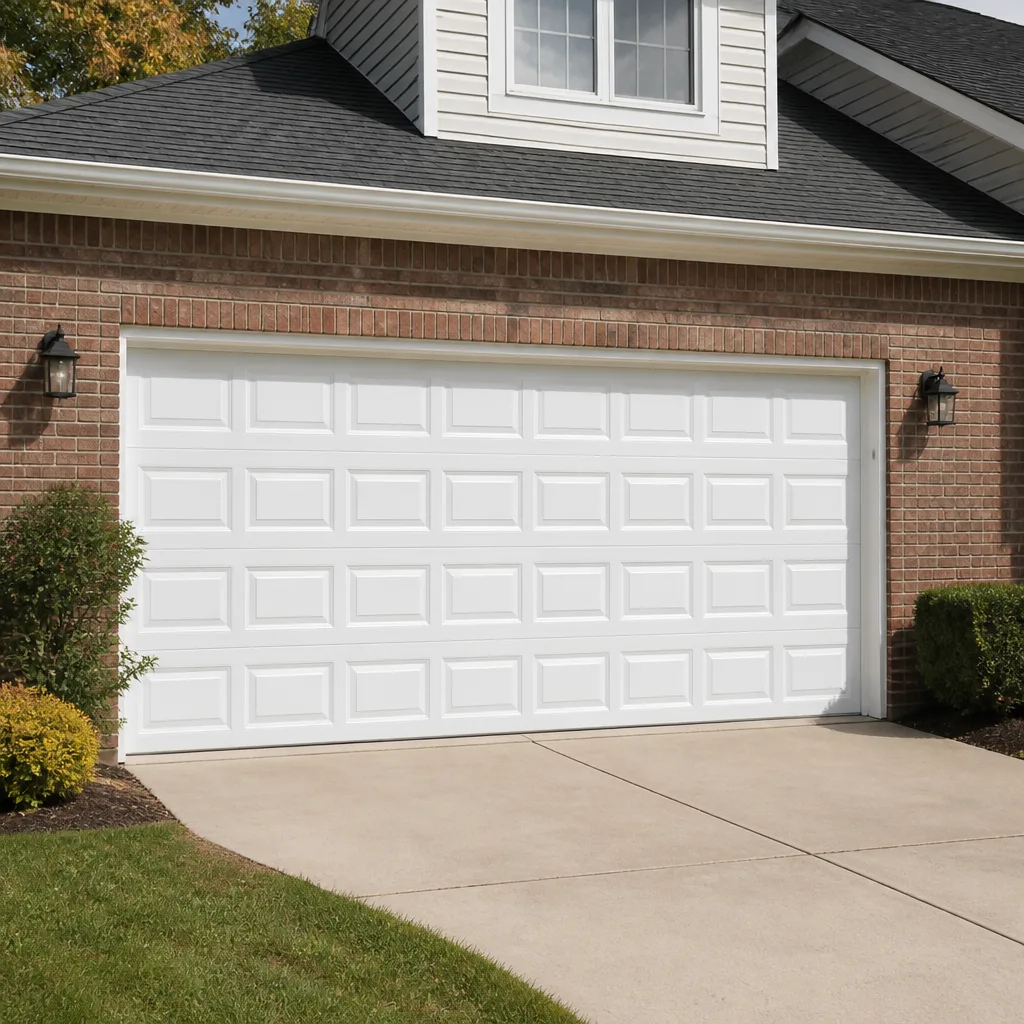 Raised-panel steel
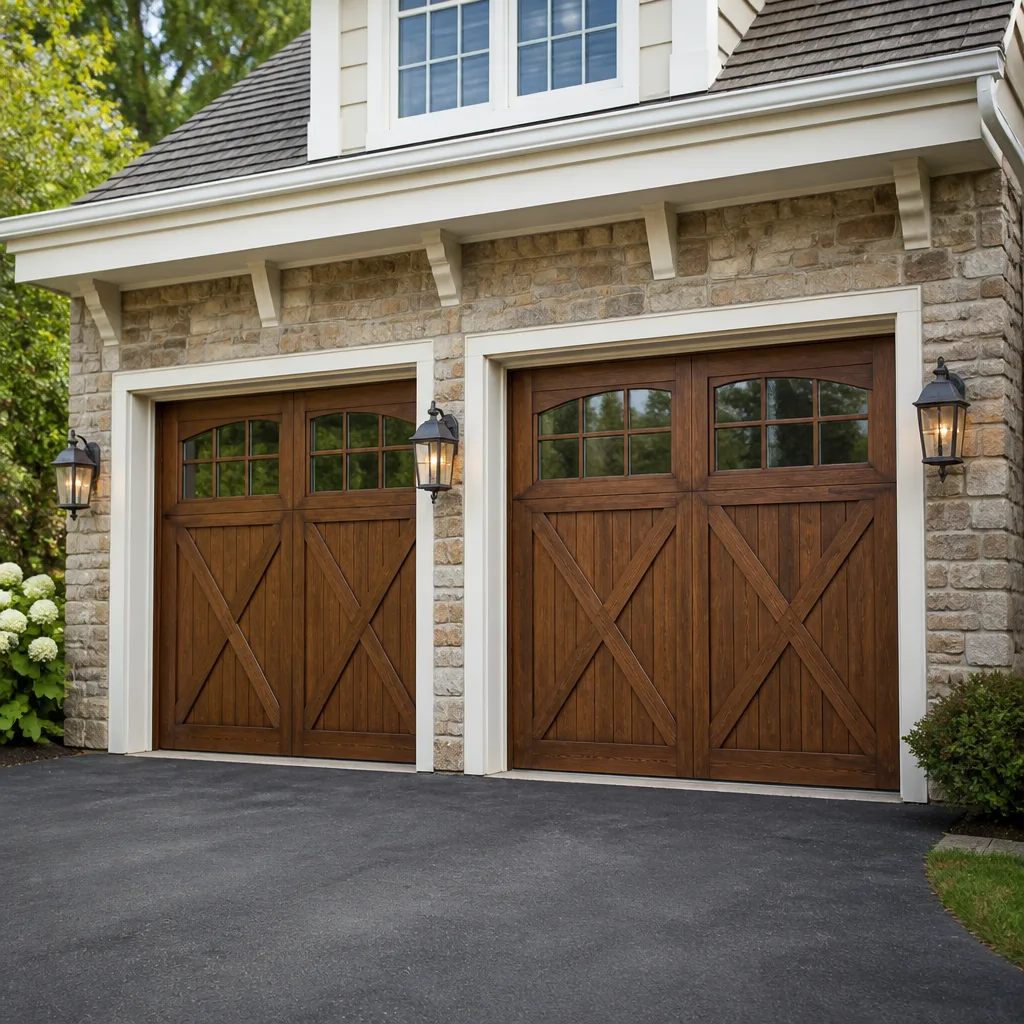 Carriage house
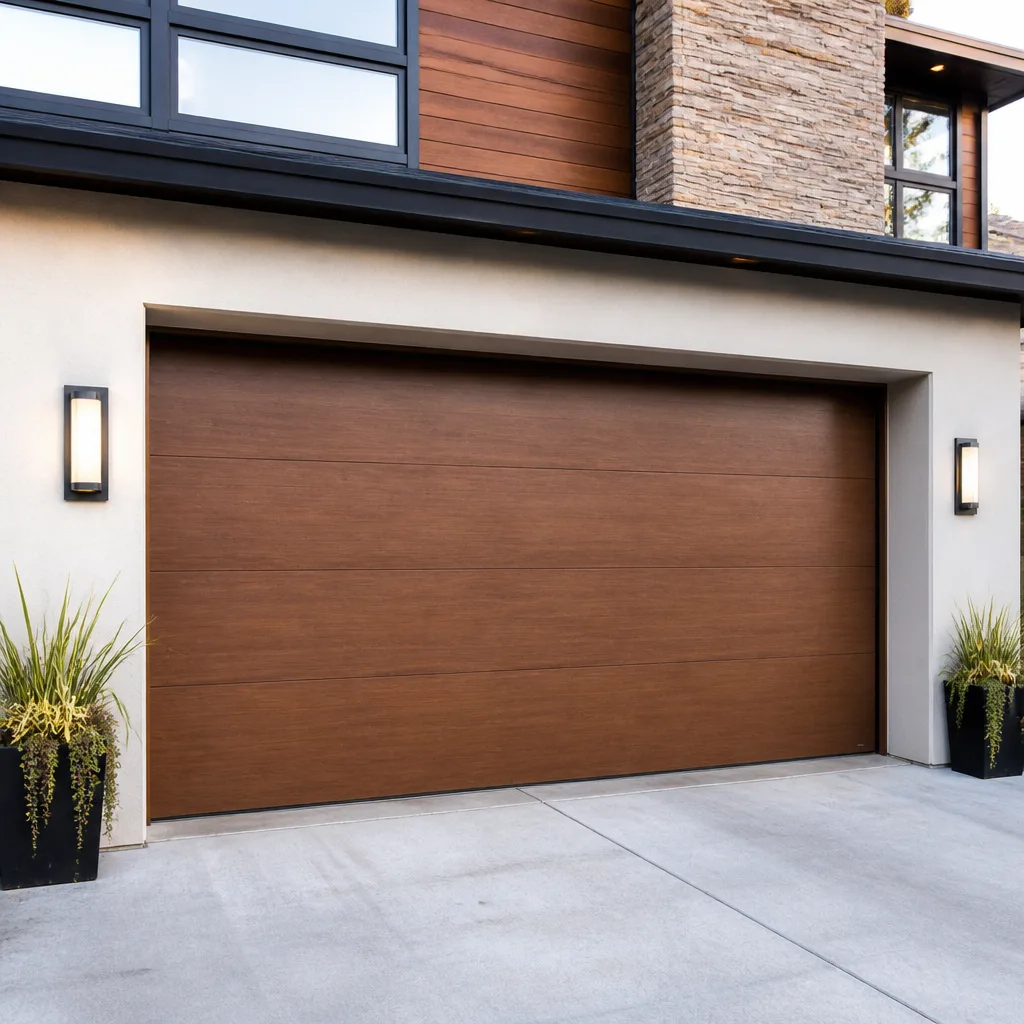 Modern flush
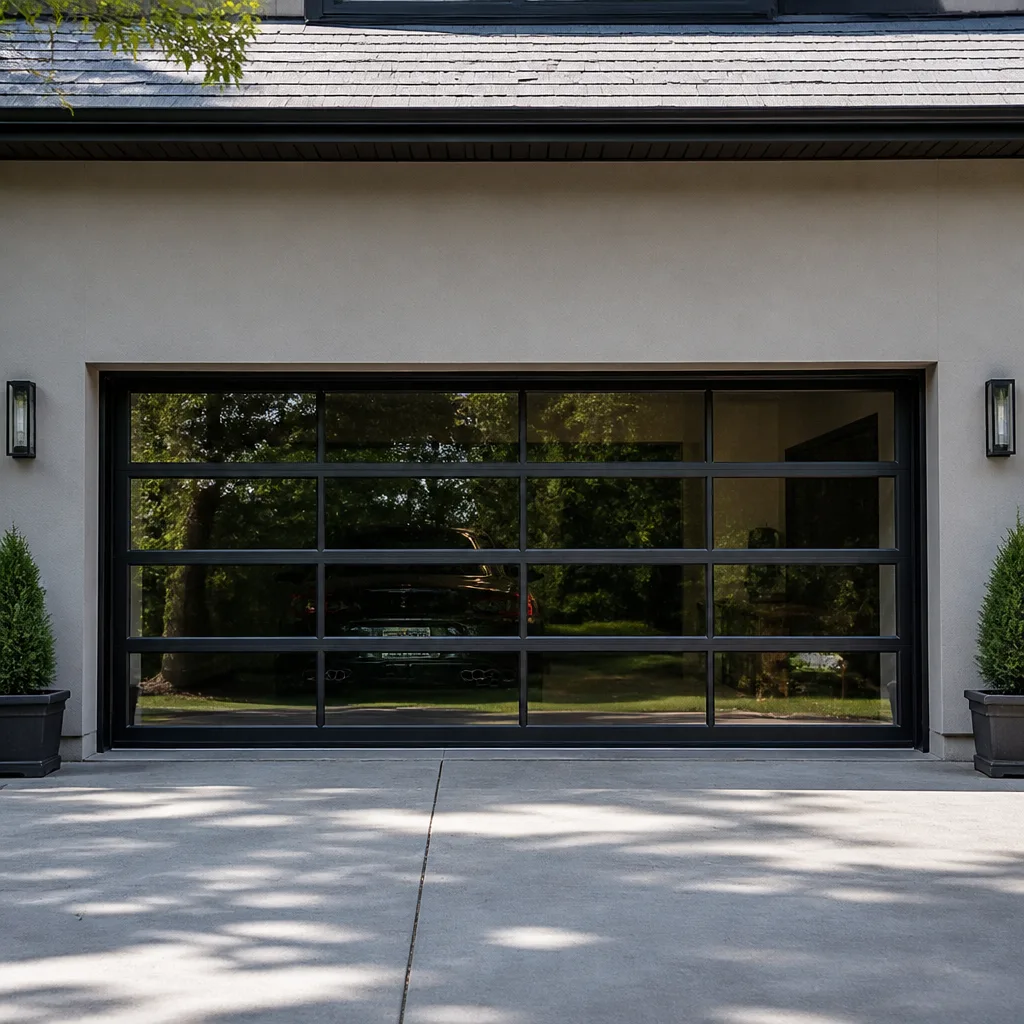 Full-view glass
 LiftMaster openers
 Chamberlain openers
Full 25-point door and opener safety check with every visit - springs, cables, rollers, tracks, and your LiftMaster or Chamberlain opener included
You get a price before we start. It does not change when the pro arrives.
Get your free estimateThe Complete Guide to Garage Doors in Logan Square
Most Logan Square garages were designed for Model A Fords. If you’re hanging a modern 7-foot door in a coach house with a 7’2″ rough opening, standard installation advice will get you into trouble before the first spring is tensioned. The brick two-flats and converted carriage houses that define this neighborhood were built in the 1920s through 1940s, and their garages carry structural quirks that suburban garage door guides never mention: shallow headroom, narrow alley setbacks, non-standard rough openings, and track configurations that assume a smaller, lighter door than anything sold today. This guide maps every decision a Logan Square homeowner faces to the actual conditions of their building type. You’ll learn how coach house openings differ from standard suburban rough openings, what that means for track type and spring selection, how alley-facing garages handle wind and security differently, which door styles fit the neighborhood’s architecture without sacrificing insulation value, and which permit triggers catch homeowners off guard during a simple replacement.
Quick Answer
Garage doors in Logan Square require more planning than in suburban markets because the neighborhood’s 1920s – 1940s brick two-flats and converted coach houses have non-standard rough openings, shallow headroom, and tight alley setbacks that affect door sizing, track type, and spring selection. A typical residential door replacement in Logan Square runs $1,200 – $2,800 installed, while a spring replacement runs $180 – $340 for a single spring, and standard door and opener repairs fall between $120 and $650 depending on the part. Because these garages were built for smaller, lighter doors, matching the new door to the existing structure matters as much as picking the door itself.
Styles & brands we work with
- Raised-panel steel
- Carriage house
- Modern flush
- Full-view glass
- LiftMaster openers
- Chamberlain openers
Table of Contents
- How coach house and converted carriage garages differ from standard rough openings
- Headroom, track type, and spring selection in Logan Square garages
- Why alley-facing garages face different wind-load and security concerns
- Door styles and brands that fit Logan Square architecture without sacrificing R-value
- The full job scope: door, opener, weatherstripping, and electrical
- Permit triggers in Chicago and Logan Square that catch homeowners off guard
- What garage door work costs in Logan Square
- Seasonal maintenance for a Logan Square garage
How coach house and converted carriage garages differ from standard rough openings
Coach house and converted carriage garages in Logan Square rarely have a standard rough opening. A typical modern garage is framed with a 7-foot clear opening and enough headroom above it to fit a torsion spring and track curve. A converted carriage house, built when vehicles were smaller, often has an opening between 6’6″ and 7’2″, and the header above it may leave only 8 to 10 inches of headroom where a standard torsion assembly needs 12. That difference decides which spring system fits, which track radius works, and whether the door can even be built in the size you want.
We’ve measured enough of these openings to know the pattern. Brick two-flats with a rear detached garage usually sit on a 25-foot-wide lot, and the garage itself is often 18 to 20 feet wide with a single door. The opening is where the surprises live. Converted carriage houses sometimes have a sloped header from an older roof line, or a header that was cut down when the structure was repurposed. If you’re replacing a door, the opening gets measured at the top, bottom, and both sides, and the smallest number is the one the new door has to fit. A rough opening that’s out of square by half an inch will bind a door that ships square.
What this means for your project:
- Measure the rough opening width, height, and headroom above the header before choosing a door model.
- Confirm whether the existing spring is torsion (a shaft across the top) or extension (springs running along the tracks). Older carriage conversions sometimes still run extension springs.
- Note the track type and radius. Low-headroom track uses a tighter curve and a different spring setup than standard 12-inch radius track.
- Check the floor-to-header measurement against the door height you want. A 7-foot door needs the finished opening to actually clear 7 feet.
When the numbers don’t line up, the door gets built to the opening rather than the opening being forced to fit a stock door. That’s one reason a garage door installation in Logan Square is less cookie-cutter than the same job in a newer subdivision. If you’re not sure what you’re measuring, the garage door repair team can check it first and quote the right door.
Headroom, track type, and spring selection in Logan Square garages
Headroom is the single measurement that decides how a garage door works in Logan Square. Headroom is the distance from the top of the door opening to the ceiling or the lowest obstruction above it. Standard torsion springs need about 12 inches. Low-headroom situations need a rear-mount torsion system or a low-clearance track, which changes how the door travels and how the spring is weighted. A door on the wrong track for the space will hit the ceiling, bind, or put excess load on the opener and springs.
Most Logan Square garages have 8-foot ceilings, which is workable but tight. Older coach houses sometimes have 7-foot ceilings, and those require a true low-headroom setup. Here’s how the three common configurations differ:
- Standard 12-inch radius track: Requires roughly 12 inches of headroom plus clearance for the horizontal track. Works in most modern garages.
- Low-headroom track: Uses a tighter curve to fit under obstructions. Commonly needed in converted coach houses and garages sharing space with storage.
- Rear-mount torsion: Moves the spring assembly to the back of the horizontal track instead of above the door. Fits the shallowest headroom situations.
Spring selection follows the same logic. A torsion spring is sized to the door’s weight, and the door’s weight depends on its material and insulation. A flush steel door with a thin skin weighs far less than an insulated carriage-house overlay door with a wood-look panel. The spring has to be matched to the actual door weight, not the door size. When we replace a spring, we look up the wire gauge and inside diameter of the existing spring, then match the new one to the door’s real weight. A spring that’s too strong lifts the door too fast; one that’s too weak can’t hold it open. Either way, the opener takes the strain and fails early.
Here’s the part that matters for safety: torsion springs are under extreme tension. A door spring can cause serious injury if it’s adjusted or removed without the right winding bars and the training to use them. Do not attempt a spring swap yourself. Our technicians have up to 13 years of experience with high-tension hardware, and spring repair is one of our most common calls for exactly this reason. If a spring has snapped, call a trained professional.
If you’re dealing with a broken spring, the Garage Door Repair Logan Square page walks through the repair process and typical turnaround.
Why alley-facing garages face different wind-load and security concerns
Logan Square’s garages face the alley, and that changes two things a front-facing suburban install never worries about: wind exposure and security. An alley-facing door sits at the end of a driveway with no house directly in front of it. In a windstorm, that door takes the full gust straight on, with no neighboring structure breaking the wind. And because the alley is more accessible than a front driveway, the door is often the first physical barrier someone meets. Both factors affect door choice.
Wind load on a garage door depends on the door’s width, the local exposure, and the panel construction. A wide single door on an alley-facing garage catches more wind than a narrower door in a sheltered position. Door panels with a heavier gauge steel and proper reinforcement handle that load better than thin, flimsy panels. That doesn’t mean every Logan Square garage needs a storm-rated door. It means the door should be sized and built for the exposure rather than chosen on looks alone.
Security works differently in an alley context too. A garage door with a working opener and a manual release is only as secure as the weakest part of the assembly. Things that matter:
- A solid, properly reinforced bottom section that doesn’t flex when pushed.
- A well-fitted perimeter seal that closes the gap between the door and the frame.
- An opener with rolling-code technology, which a garage door opener repair technician can confirm is working correctly.
- Deadbolts or a locking bar on manually operated doors.
An opener that uses an old fixed-code remote is a bigger security gap than most people realize, because a fixed code can be copied. LiftMaster and Chamberlain both offer rolling-code openers that change the code with every use. If your opener is older than that technology, replacing it is often the simplest security improvement you can make. We work with the brand you already own, so if you have a LiftMaster or Chamberlain unit, we can tell you whether a repair or a replacement makes more sense.
Door styles and brands that fit Logan Square architecture without sacrificing R-value
Logan Square’s architecture runs from brick two-flats to greystones to worker cottages, and the garage door is the one element homeowners get to choose freely, since the garage is usually at the rear. You don’t have to match the house’s facade exactly. You do have to choose a door that reads as part of the block and still insulates the space. Those goals don’t conflict if you pick the right style.
Here’s how the main options map to the neighborhood:
- Flush steel panels: Clean and flat, with horizontal seams. This style suits a brick two-flat or a minimalist renovation. It’s often the most affordable choice and can be ordered insulated, which matters because a single-skin steel door has almost no R-value and will cook the garage in July.
- Carriage-house overlay: A steel base panel with a decorative overlay that mimics a swing-door carriage look. This is the natural fit for converted coach houses and older carriage buildings, since the door reads as consistent with the structure’s origins. Brands like Clopay and Amarr build these with insulated cores.
- Full-view aluminum: A frame of aluminum sections with glass panels. This suits a modern renovation or a garage used as a workspace, and it lets light in. Insulated glass improves the thermal performance, but the R-value is typically lower than a solid insulated door.
R-value is where homeowners get tripped up. R-value measures a door’s resistance to heat flow, and it depends on the insulation core, the door thickness, and how well the panels are sealed. A thin steel door with a polystyrene core insulates far less than a thicker door with a polyurethane core. For a detached garage, the R-value mostly affects how comfortable the space is and how much the door sweats when temperatures swing. For an attached garage, it also affects the house, because the shared wall carries heat in and out. If your Logan Square garage shares a wall with living space, that’s worth a thicker insulated door.
We install doors from Clopay, Amarr, Wayne Dalton, and Raynor, and match openers from LiftMaster, Chamberlain, Genie, and Craftsman. That means the door and the opener get sized to each other rather than bought separately and forced to work together.
The full job scope: door, opener, weatherstripping, and electrical
A garage door replacement in Logan Square touches more than the door. In a tight urban space where the garage sits close to a fence, a neighbor’s structure, or an alley easement, every piece of the job has to be coordinated, because a second contractor can’t easily come back to finish what the first left undone. The door, the opener, the weatherstripping, and the electrical all interact. Here’s what the full scope includes:
- Door removal and disposal. The old door and tracks come out. In an alley-facing garage, disposal and access have to be planned around the alley width.
- Opening and structure check. The rough opening, header, and jambs are checked for square and condition before the new door goes in.
- Track and spring installation. Track type and spring system are fitted to the headroom, then the springs are tensioned to the door’s actual weight.
- Opener installation or reuse. If you’re keeping your opener, it’s checked for compatibility with the new door’s weight. If it isn’t compatible, a new opener is installed and paired to the remotes and wall control.
- Weatherstripping and seals. The bottom seal, perimeter seal, and any threshold are fitted. In a Logan Square garage, a worn bottom seal is a common source of drafts and water intrusion because the door meets an uneven or settled floor.
- Electrical connection. If the opener needs a new outlet or a safety sensor needs wiring, that electrical work has to be handled. If the garage has no power at the door, the opener option has to account for that.
This is why scope matters. If your door installer doesn’t handle openers, and your opener installer doesn’t handle doors, you end up coordinating two schedules in a space where access is already limited. Spring repair, opener repair, panel replacement, and full installation all fall under one service call with us, which keeps the moving parts inside a single job.
For the full installation process, the garage door installation page lays out what happens from measurement to final test. And if you’re only after a part, our garage door parts supply covers panels, springs, rollers, and openers from the brands we work with.
Permit triggers in Chicago and Logan Square that catch homeowners off guard
Permit requirements for garage door work surprise a lot of Logan Square homeowners because a simple replacement isn’t always a simple replacement. The trigger isn’t usually the door panel itself. It’s the structure around it, or the electrical work, or the door’s size relative to the opening. A straight panel swap on an existing frame often doesn’t require a permit. Work that changes the opening, adds electrical, or alters the structure usually does.
The situations most likely to need a permit:
- Enlarging or changing the rough opening. If the new door needs a wider or taller opening, the header is affected, which makes it a structural change.
- New or altered electrical. Adding an outlet for an opener, or rerouting wiring, falls under electrical permit rules.
- Structural repair to the header, jambs, or garage framing. If rot or settling has compromised the framing, the repair is structural.
- Changing the garage’s footprint or the door’s location. A door moved to a new wall changes how the structure bears load.
Chicago’s rules for residential garage work aren’t always obvious from a homeowner’s reading of the code, and the answer can depend on the specific scope. The right move is to ask your city’s building department before the work starts, not after, and to describe exactly what will change: the opening, the electrical, or the structure. A licensed local professional will know which scopes trigger a permit and can tell you what the inspection pathway looks like.
One more point on the code side: safety sensors and the auto-reverse function are required on openers, and a replacement opener needs to be installed with them working. If you’ve disabled a sensor because it kept tripping, that’s worth fixing during any opener service.
What garage door work costs in Logan Square
Cost in Logan Square depends on the door size, the headroom situation, and whether the opener is part of the job. The ranges below are typical estimates for the neighborhood based on the housing stock and the types of work we see most often. The written estimate always sets the final price, and the price is quoted and agreed before any work starts.
| Job | Typical estimated range |
|---|---|
| Torsion spring replacement (one spring) | $180 – $340 |
| Matched pair of springs | About twice the single-spring range |
| Standard door repair (rollers, hinges, cables, panel) | $120 – $450 |
| Opener repair or replacement | $150 – $650 |
| New door installed (flush steel or similar) | $1,200 – $2,800 |
| Insulated carriage-house overlay door installed | Higher than base flush steel, quoted per door |
Springs are the piece homeowners ask about most. A single torsion spring typically runs $180 – $340. Springs are usually replaced as a matched pair because the two are wound at the same time and share the same cycle life. A pair costs about twice the single-spring figure. If only one has snapped, replacing just that one leaves the older spring next to it, and the older one usually fails soon after.
Door installation in Logan Square often lands at the higher end of the range because coach house openings and low-headroom situations need custom sizing, low-clearance track, or a rear-mount spring. A stock door in a standard suburban opening is the quickest install. A door cut to fit a 6’10” opening in a converted carriage house is not.
What you should expect from any quote: the door model and size, the spring type and count, the track type, whether the opener is included, and what happens if the opening needs adjustment once the old door comes off. The written estimate covers those items, and that’s the number that matters. For a fast look at repair costs and scheduling, Garage door repair in Logan Square covers the common repairs and how same-day service works.
Seasonal maintenance for a Logan Square garage
Chicago weather is hard on garage doors. Freeze-thaw cycles work on the concrete floor under the door, which shifts the bottom seal and creates gaps. Summer heat expands the tracks and softens the seals. A short maintenance routine, run a few times a year, extends the life of the door and catches small problems before they become repairs.
Here’s the checklist:
- Look at the springs above the door. If you see a gap in the coil, or the door feels much heavier than usual, stop using the opener and call for service. Do not try to adjust the springs.
- Check the bottom seal for cracks, tears, or gaps where it meets the floor. A worn seal lets in water and drafts, especially after a freeze-thaw winter.
- Inspect the rollers and hinges for wear. Worn nylon rollers make a door noisy and put extra load on the opener.
- Test the safety sensors. Put a box in the door’s path and press close. The door should reverse. If it doesn’t, the sensors or the opener need attention.
- Look at the track for bends or debris. A bent track will bind the door and damage the rollers.
- Listen to the opener. Grinding or straining usually means the door is out of balance, which points back to the springs.
Most of this is visual, and any of it can be handled during a service visit. What shouldn’t be handled at home is the spring system. Those coils hold a lot of stored energy even when the door is down, and a wrong move can cause serious injury. That’s a job for a trained professional.
Common Mistakes to Avoid
- Buying a stock door without measuring the rough opening. A 7-foot door won’t fit a 6’10” coach house opening. Measure width, height, and headroom before ordering, or the door ships and can’t be installed.
- Replacing one spring when both are the same age. The second spring is usually on the same wear cycle. A pair is the standard replacement, and doing them together saves a second service call.
- Assuming low headroom is fine because the door “almost” fits. A door that grazes the ceiling will bind, wear the track, and overload the opener. Low-headroom track or a rear-mount spring exists for a reason.
- Ignoring the bottom seal. In a Logan Square garage, a worn seal is the usual path for water and cold air. It’s a cheap part and an easy fix during any service visit.
- Hiring a handyman for spring work. General handyman services often decline high-tension spring jobs, and for good reason. Spring repair needs specific tooling and training.
- Skipping the permit question. Enlarging an opening or adding electrical can trigger a permit. Asking your city’s building department first is cheaper than fixing a scope problem later.
- Putting a heavy insulated door on an opener rated for a light door. The opener has to match the door’s weight. If you upgrade the door, check the opener.
See the difference
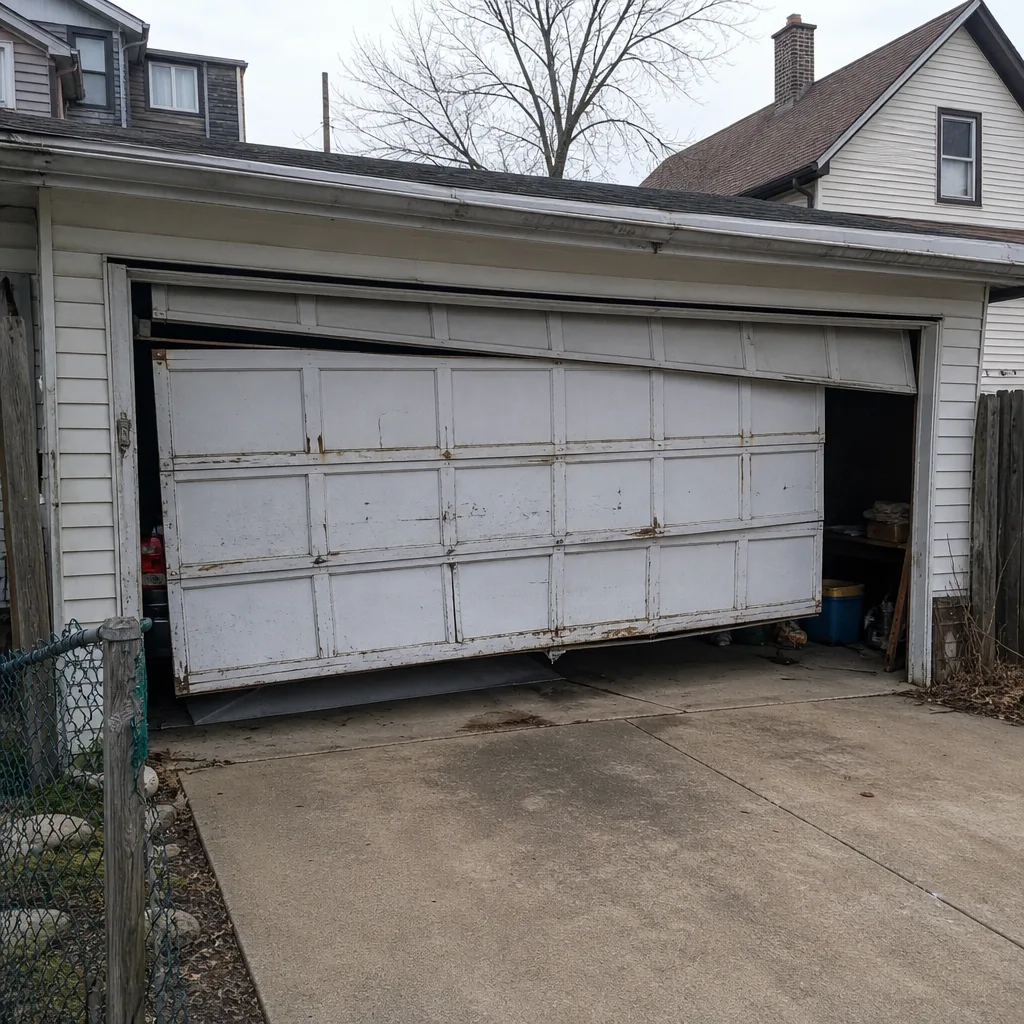 Before
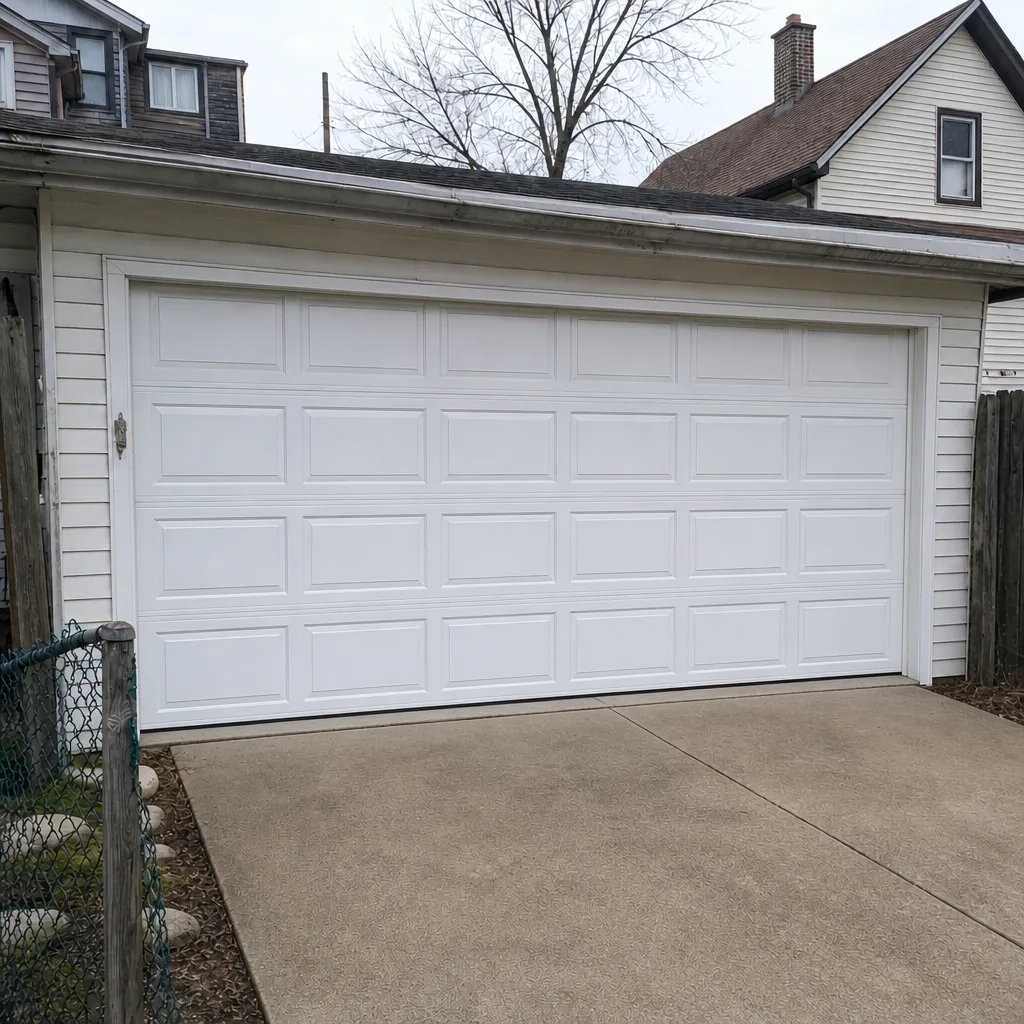 After
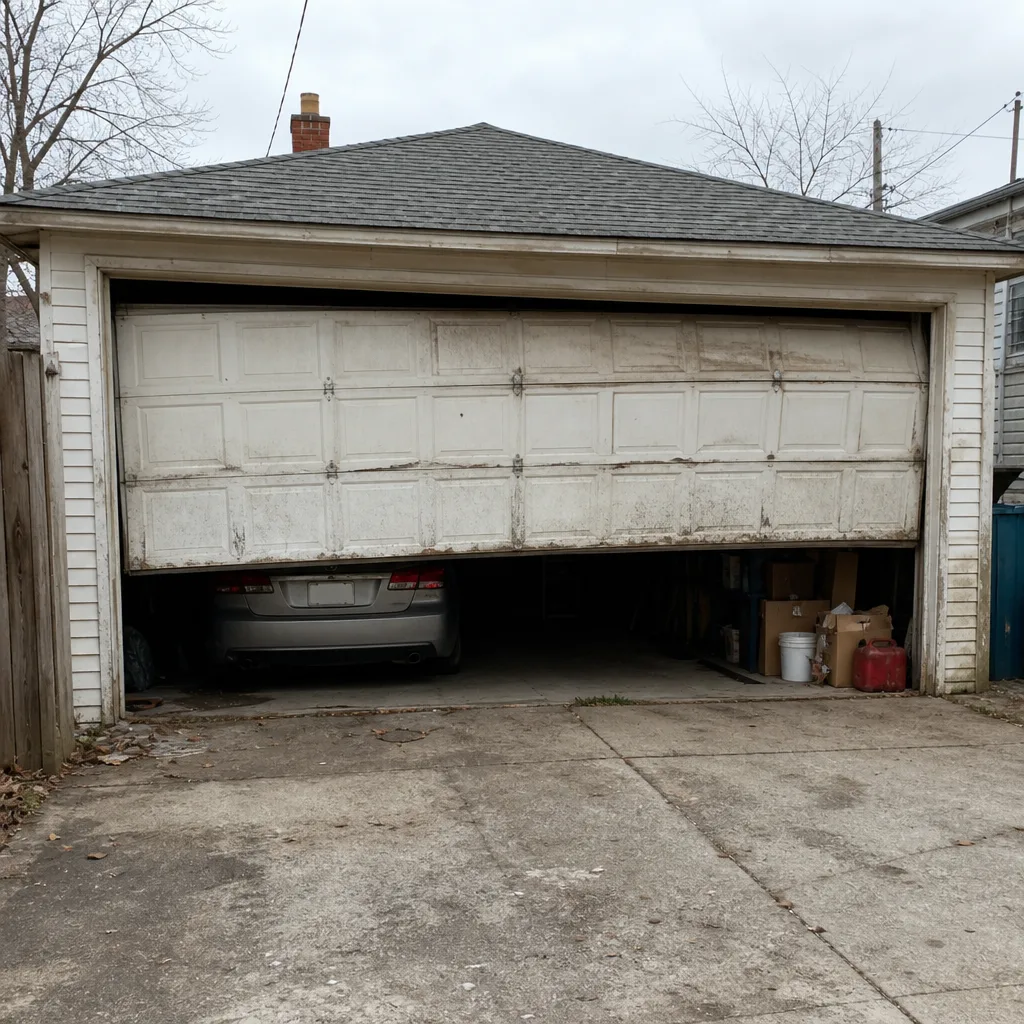 Before
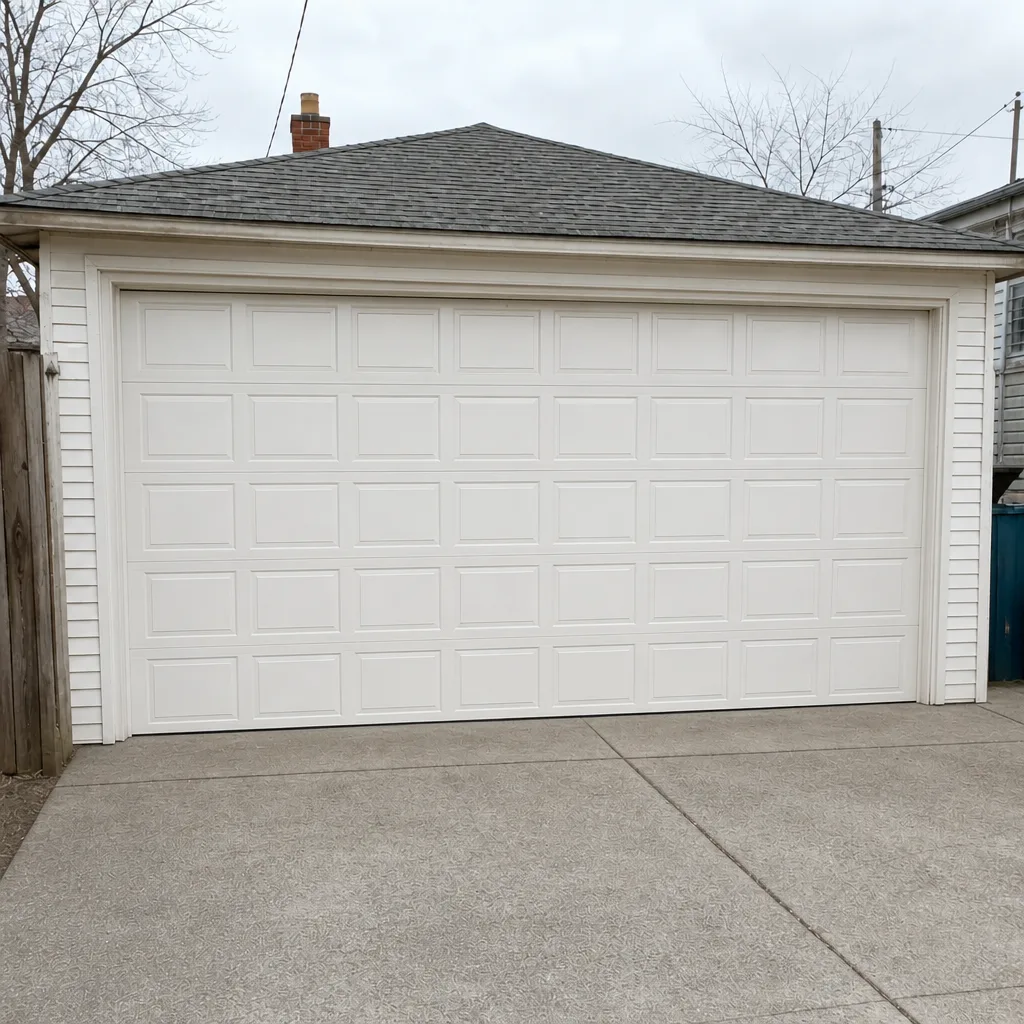 After
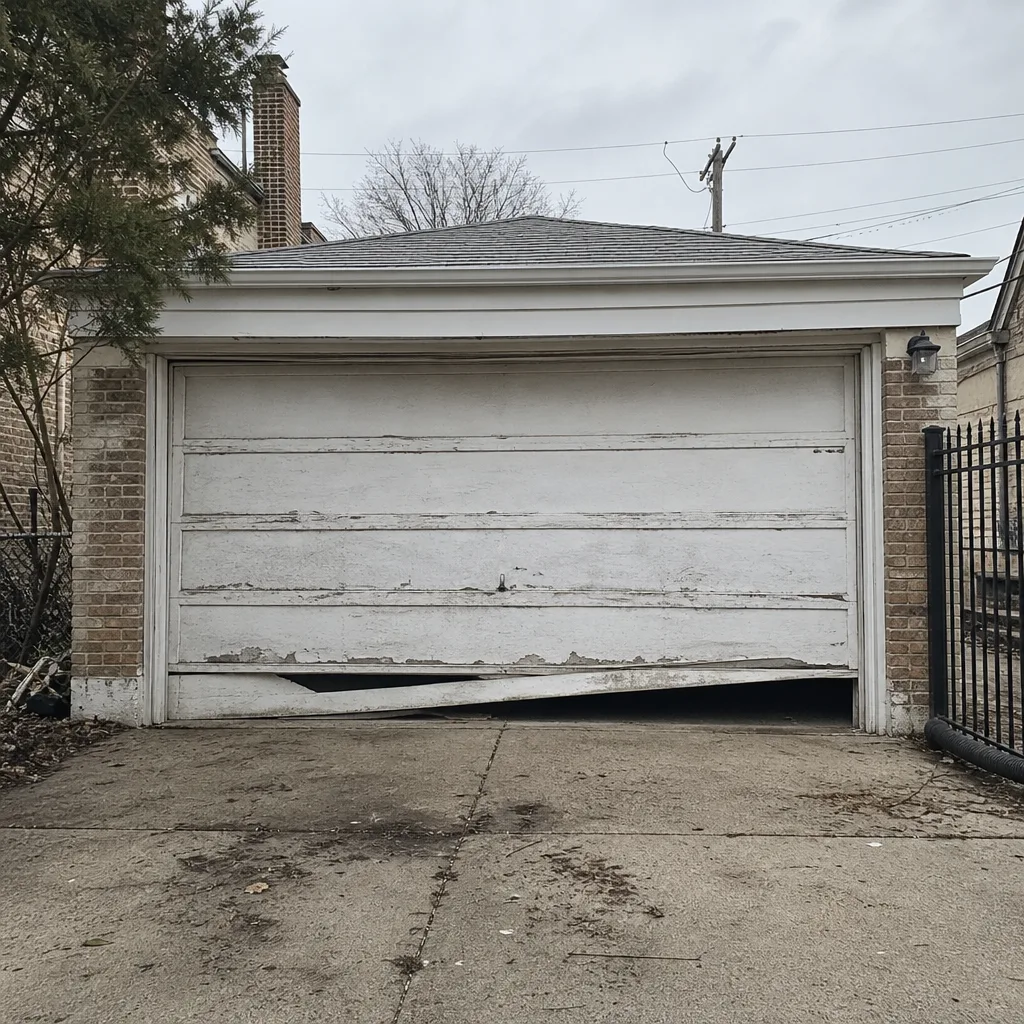 Before
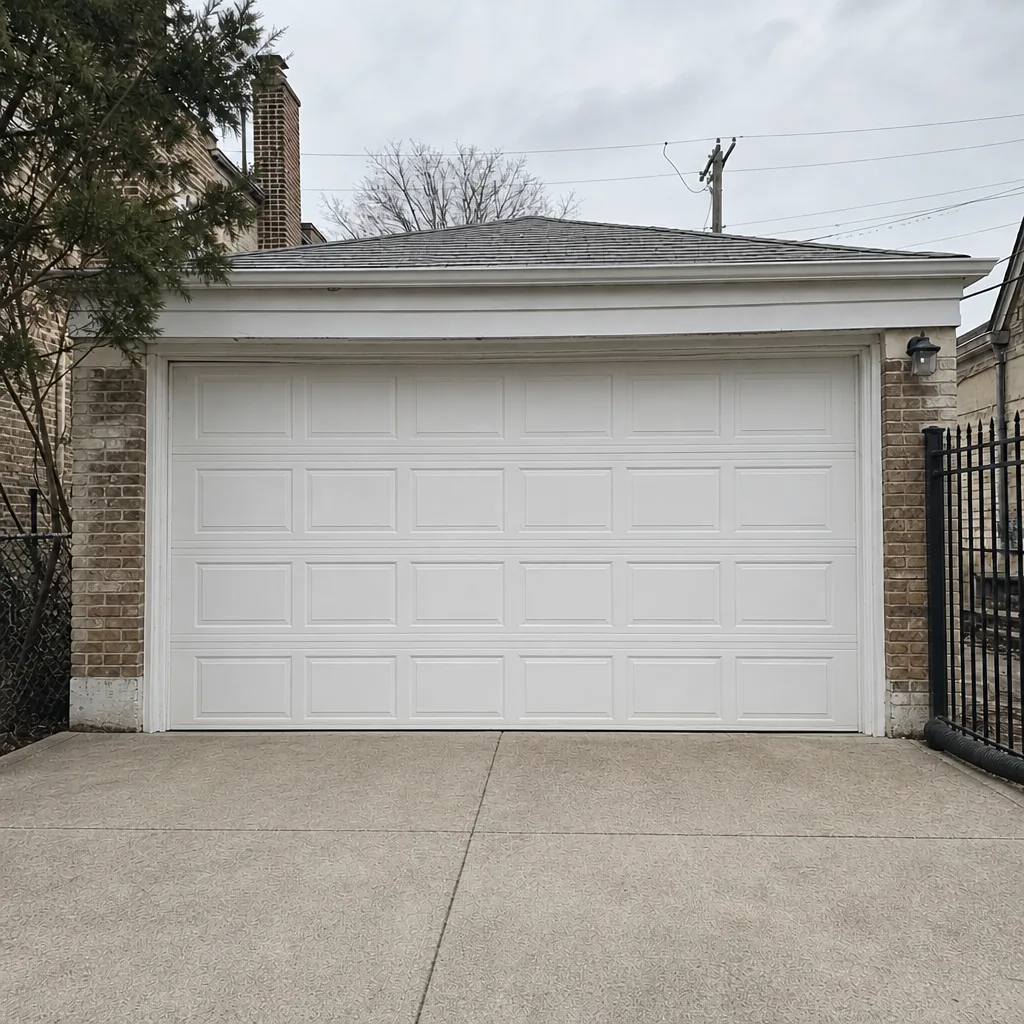 After
When to Call a Professional
Call a professional when the door won’t open or close, when you see a gap in a spring, when the door comes down unevenly or reverses on its own, or when the opener strains or grinds. Also call when the door has been hit and a panel is bent, when the bottom seal is failing and the door won’t sit flush, or when you’re planning a replacement and the opening isn’t a standard size. Those are all jobs where the right tooling and the right measurement make the difference. Garage Door Repair Logan Square offers free estimates in Logan Square. Call (866) 650-1667. We answer 24/7. Fast dispatch from 7am to 7pm, Sunday through Friday.
Frequently Asked Questions
A typical garage door replacement in Logan Square runs $1,200 – $2,800 installed for a flush steel or similar door, and insulated carriage-house overlay doors cost more because they’re built to fit. Coach house and low-headroom openings often land at the higher end of the range, since they may need custom sizing or low-clearance track. The written estimate sets the final price, quoted and agreed before any work starts. Call (866) 650-1667 for an exact quote; estimates are free.
Yes, spring replacement is usually a same-day repair when the spring is in stock and the door’s weight can be matched to a new spring on site. A torsion spring replacement typically runs $180 – $340 for a single spring, with a matched pair at about twice that. Call (866) 650-1667 to check availability.
Yes. Non-standard openings are common in Logan Square coach houses and converted carriage garages, and the door is sized to the actual rough opening rather than forced into a stock size. We measure width, height, and headroom first, then specify the track type and spring system that fit. The written estimate covers the custom size. Call (866) 650-1667 for a free measure.
A straight replacement on an existing frame often doesn’t require a permit, but work that changes the rough opening, adds electrical, or touches the garage’s structure usually does. Because the rules depend on your specific scope, ask your city’s building department before work starts and describe exactly what will change. A licensed local professional can tell you what the inspection pathway looks like.
We work on LiftMaster, Chamberlain, Genie, Clopay, Amarr, Wayne Dalton, Craftsman, and Raynor, which covers most of the doors and openers installed in Logan Square homes. If you tell us what you have, we’ll tell you exactly what it needs. That includes both legacy openers and modern smart-home units. Call (866) 650-1667.
No. The price is quoted and agreed before any work starts, and the written estimate is the number that matters. If something unexpected turns up once the old door comes off, we’ll tell you before doing any additional work and re-quote it. Estimates are free. Call (866) 650-1667 to schedule one.
The Bottom Line
Garage doors in Logan Square are a different job than they are in a newer suburb. The 1920s – 1940s brick two-flats and converted coach houses have non-standard rough openings, shallow headroom, and alley-facing exposure that affect the door, track, spring, and opener together. Measure before you choose a door. Match the spring to the door’s actual weight. Don’t touch a torsion spring yourself. Ask your city’s building department about the permit before the work starts. And when the job spans the door, the opener, the seal, and the electrical, keep it with one contractor who works on the brand you already own. Call (866) 650-1667 for a free estimate. We answer 24/7. Fast dispatch from 7am to 7pm, Sunday through Friday.
Written by the team at Garage Door Repair Logan Square.