
Last updated November 21, 2026
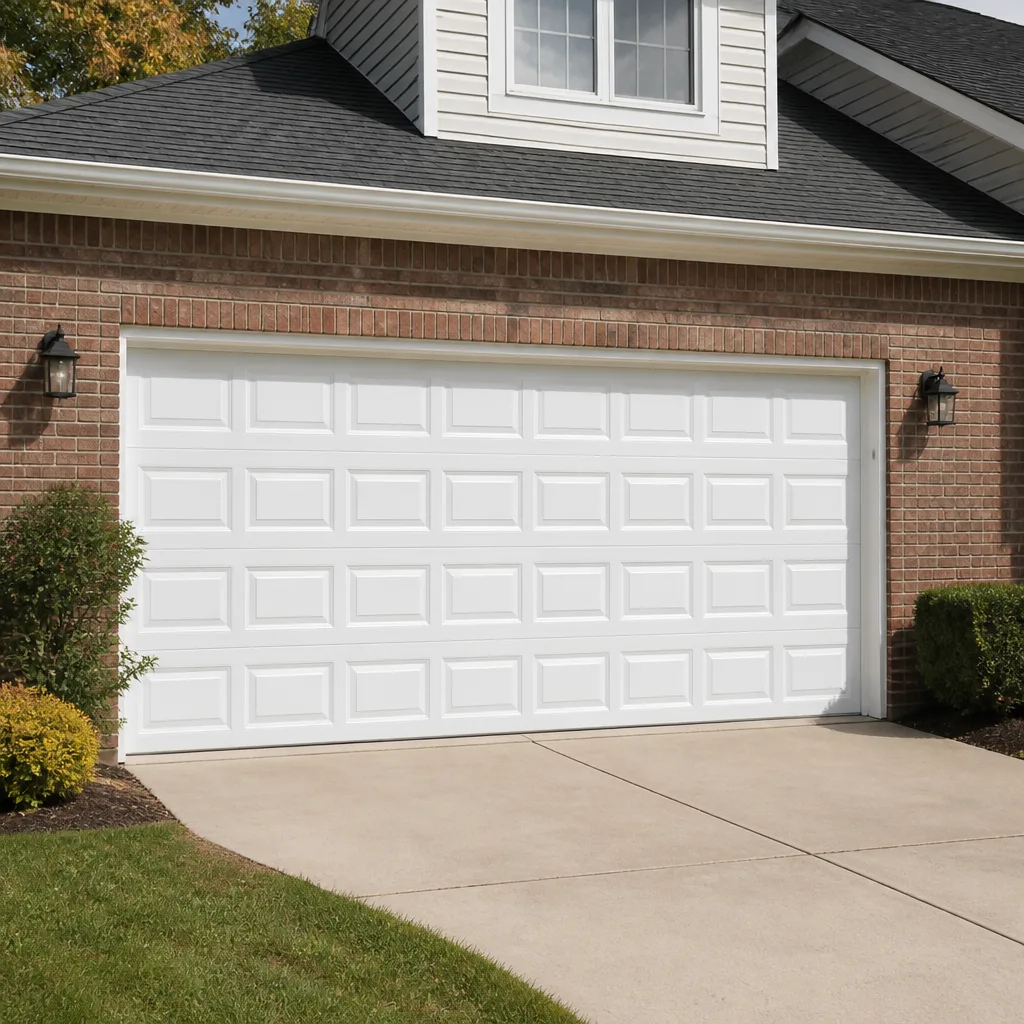 Raised-panel steel
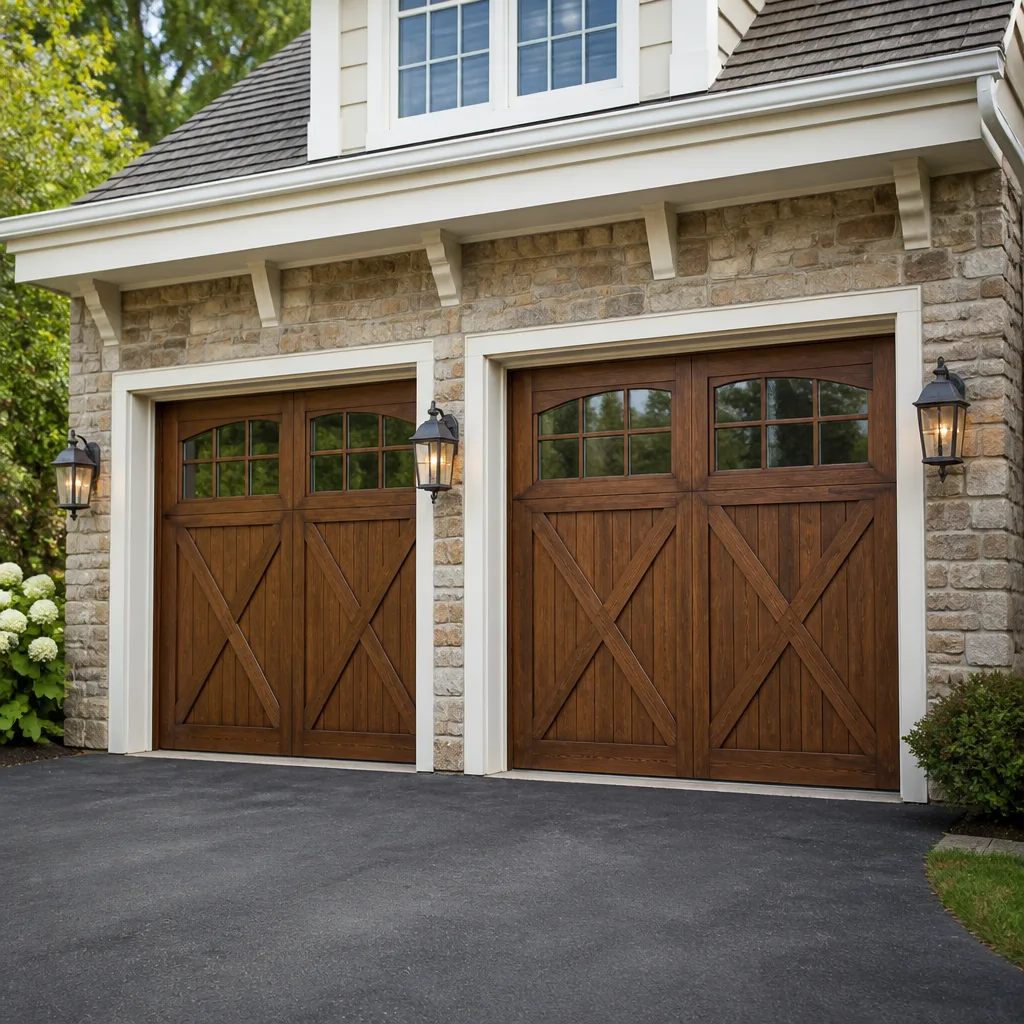 Carriage house
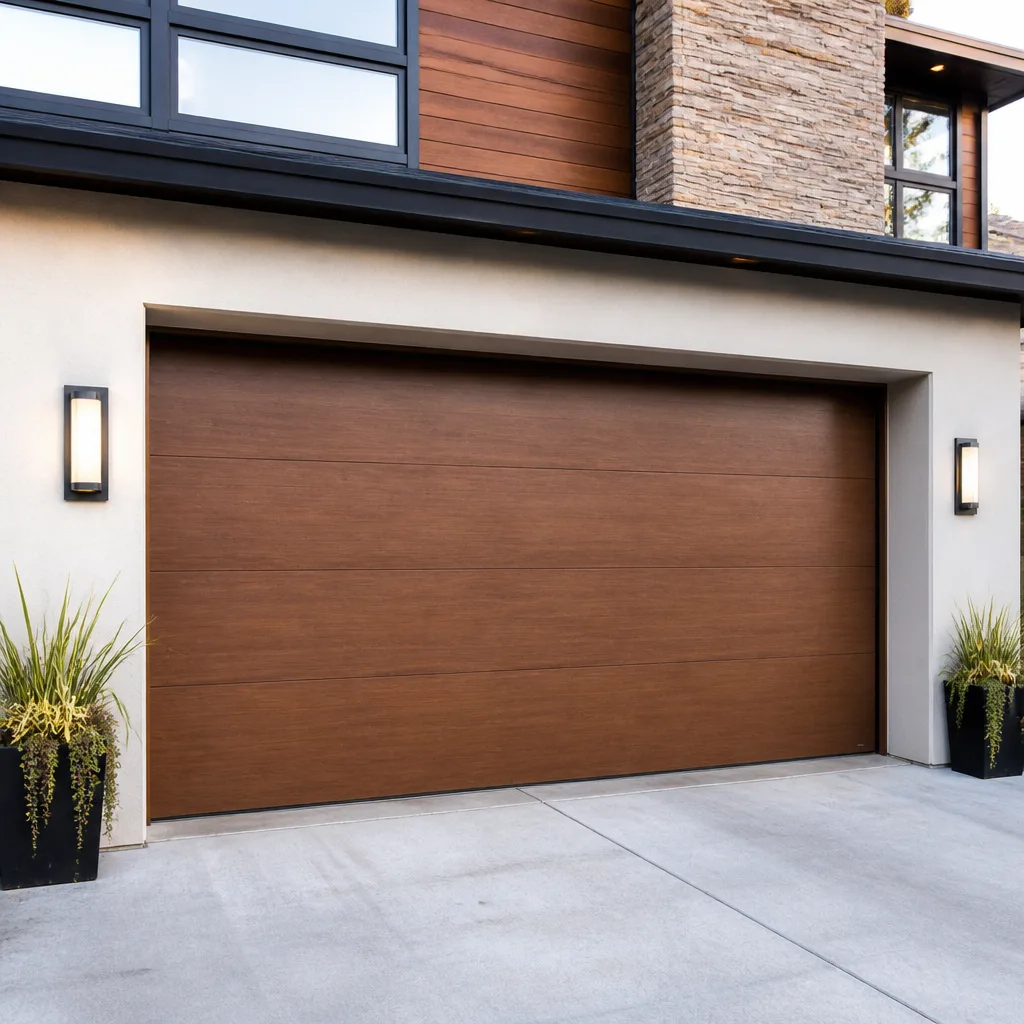 Modern flush
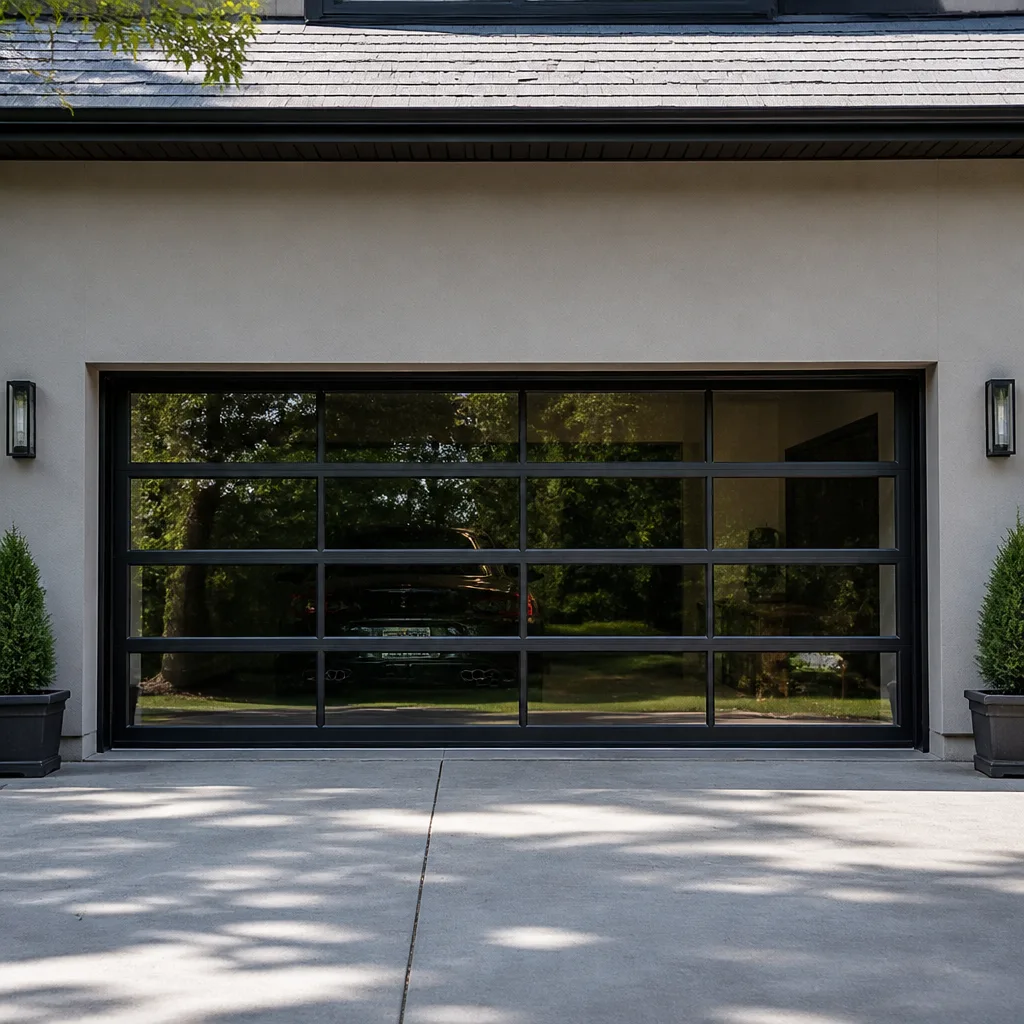 Full-view glass
 LiftMaster openers
 Chamberlain openers
Full 25-point door and opener safety check with every visit - springs, cables, rollers, tracks, and your LiftMaster or Chamberlain opener included
You get a price before we start. It does not change when the pro arrives.
Get your free estimateGarage Door Repair Troubleshooting in Logan Square: Common Problems and How to Fix Them
Most garage door problems look like one failure and turn out to be another. A door that reverses before it hits the floor gets blamed on springs, sensors, or the motor, when it’s almost always a close-limit setting on the opener itself. That gap between what a door does and what’s actually wrong is where homeowners lose money: they describe the wrong symptom to a technician, the first visit arrives without the right part, and a ninety-second adjustment becomes a second appointment. This guide maps symptoms to root causes with enough mechanical detail that you can diagnose which of five failure categories you’re in before you call anyone in Logan Square.
Quick Answer
Garage door troubleshooting starts with matching the symptom to the right system: a door that reverses on close is usually an opener limit or safety-sensor issue, a door that won’t open at all is usually a spring, cable, or opener logic failure, and a door that opens partway and stops is usually a track, roller, or travel-limit problem. You can separate mechanical failures from electrical ones in under ten minutes using the manual release cord. Spring, cable, and drum work is not a DIY job, but limit screws, sensor cleaning, and lubrication are.
Styles & brands we work with
- Raised-panel steel
- Carriage house
- Modern flush
- Full-view glass
- LiftMaster openers
- Chamberlain openers
Table of Contents
- The Five Failure Categories Every Garage Door Problem Falls Into
- How to Tell If It’s Mechanical or Electrical
- Door Reverses Before It Hits the Floor
- Door Won’t Open at All
- Door Opens Partway and Stops
- Why Logan Square Doors Misdiagnose Differently
- What’s DIY-Safe and What Isn’t
- How to Describe Your Diagnosis So the Right Parts Arrive
The Five Failure Categories Every Garage Door Problem Falls Into
Every residential garage door failure in Logan Square falls into one of five buckets: opener logic and limits, safety sensors, springs and cables, tracks and rollers, and the door panel or hardware itself. Getting the category right is the whole game. It decides whether you need a screwdriver or a phone call, and it decides whether the technician shows up with a LiftMaster logic board or a pair of torsion springs.
Here’s how the categories break down by what you’ll notice:
- Opener logic and limits: the door moves but stops in the wrong place, reverses, or ignores the wall button. The motor runs, the door doesn’t behave.
- Safety sensors: the door starts down and snaps back up, or won’t close from the remote but closes when you hold the wall button.
- Springs and cables: the door is suddenly heavy, won’t lift past a few inches, or the opener strains and clicks. You may hear a bang from the garage.
- Tracks and rollers: the door binds, scrapes, or comes off one side. It moves, but roughly.
- Panels and hardware: dents, bent hinges, cracked glass, a broken handle or lock. Cosmetic or structural, but the door still cycles.
The reason this matters is that two categories can produce the same symptom. A door that won’t open could be a snapped torsion spring or a failed opener capacitor, and the fix is completely different. In our experience, the fastest way to sort it is to pull the manual release and test the door by hand. More on that next.
How to Tell If It’s Mechanical or Electrical
The manual release cord is the single most useful diagnostic tool on your door. It’s the red handle hanging from the opener trolley, and pulling it disconnects the door from the motor so you can move the door by hand. That one move splits the entire problem in two.
- Pull the release cord. The trolley separates from the door arm and the door is now free.
- Lift the door by hand, halfway. A healthy door lifts with steady, even resistance and stays put at the halfway point when you let go.
- Judge the feel. If it’s heavy, jerky, or won’t stay up, the problem is mechanical: springs, cables, tracks, or rollers. If it glides easily and stays put, the door is fine and the problem is electrical: sensors, opener logic, wiring, or the wall button.
- Let it back down carefully. Reconnect the trolley by running the opener until it re-engages, or follow your opener’s manual for reconnection.
A door that lifts easily by hand but won’t move with the opener points to an electrical fault. Check the wall button first: if it works but the remote doesn’t, the problem is the remote or its battery. If neither works, look at the safety sensors and the opener’s logic board. On a Chamberlain or Genie unit, a blinking LED on the motor head is usually a diagnostic code, and the opener manual tells you what each blink pattern means.
Door Reverses Before It Hits the Floor
A door that reverses before it hits the floor is almost always a close-limit or safety-sensor issue, not a spring or motor failure. This is the most common misdiagnosis we see in Logan Square, and it’s also the cheapest to fix.
Work through it in this order:
- Look at the safety sensors. The two photo-eye lenses at the bottom of the tracks should have steady lights on both sides. A flickering or dark light means the beam is broken or the lens is dirty. Wipe both lenses with a dry cloth and check again.
- Check for obstructions. A broom handle, a recycling bin edge, or a cobweb across the beam will trip the sensor. Clear the line between the two eyes.
- Adjust the close limit. On the opener unit, the close-limit screw controls how far the door travels down. Turn it a quarter turn in the direction marked on the opener housing, then test. Repeat in small increments until the door seats fully.
- Test the safety reverse. With the door closing, wave an object through the beam. The door should reverse immediately. If it doesn’t, the sensor or the opener’s logic is at fault and it needs a technician.
That last test is the one people skip. A door that closes but doesn’t reverse on an obstruction is a genuine safety problem and should not be used until it’s fixed. If you’ve cleaned the sensors and adjusted the limit and the door still reverses, the sensor alignment or the opener’s logic board is the likely culprit, and that’s a garage door opener repair call rather than a door repair.
Door Won’t Open at All
A door that won’t open is usually a broken spring, a snapped cable, or a failed opener, and the manual release cord tells you which within a minute. If the door is heavy and won’t lift by hand, it’s mechanical. If it lifts easily but the opener won’t move it, the opener is the problem.
Mechanical causes, in rough order of frequency:
- Broken torsion spring. The most common garage door failure and the most dangerous component on the door. A snapped spring leaves the door extremely heavy, and the opener will strain or refuse to lift it. Leave it alone.
- Snapped or jumped cable. The door hangs unevenly or one side drops. Cables are under high tension and shouldn’t be touched.
- Bent track or popped roller. The door binds at a specific height. Look for a track that’s out of line or a roller that’s come out of the channel.
- Broken hinge or door arm. The opener runs but the door doesn’t follow because the connecting hardware failed.
Electrical causes: a tripped breaker at the panel, a dead opener capacitor, a disconnected safety sensor, or a logic board failure. Older Craftsman and Genie openers sometimes fail at the capacitor as they age, which shows up as a motor that hums but doesn’t move. If you’ve confirmed the door lifts by hand and the opener still won’t run it, that’s an opener fault, and any garage door repair visit should start with the opener, not the door.
Door Opens Partway and Stops
A door that opens partway and stops is usually a travel-limit setting, a binding track, or a force setting that’s too low. This one is often mechanical and electrical together, which is why it gets misdiagnosed.
Start by watching where it stops. Always the same height points to a mechanical bind or a travel limit. Stops at random heights points to a force or logic issue. Then check these in order:
- Run the door by hand with the release pulled. If it binds at the same height, look for a bent track, a worn roller, or a hinge that’s seized. If it moves freely, the problem is in the opener.
- Check the open-limit screw. The open limit sets how far the door travels up. If it’s set short, the door stops early. Adjust it in small increments and test each time.
- Check the force setting. Openers have a force adjustment that tells the motor how hard to push. If it’s set too light, the opener stops when it meets normal resistance. Adjust only if the door moves freely by hand, since raising force on a binding door masks the real problem and strains the opener.
- Look for a worn roller or a dry hinge. A single seized roller can stop a door partway. Lubricate the hinges, rollers, and springs with a garage-door lubricant, not WD-40.
If the door moves freely by hand and the limits are correct but it still stops, the opener’s logic board or travel module is the likely fault. On a LiftMaster or Chamberlain unit, that’s a board-level repair, not an adjustment.
Why Logan Square Doors Misdiagnose Differently
Logan Square’s housing stock makes garage door diagnosis harder than it is in newer suburbs, for reasons that don’t show up on a generic troubleshooting page. The neighborhood is full of two-flats, three-flats, and coach houses, many of them built in the early twentieth century, and a lot of them have garages that were added or converted later. That history creates three specific problems.
Non-standard header clearance. Older Logan Square garages often have a header height that doesn’t match a modern door’s standard dimensions, and the door may have been modified or shimmed to fit. When a door binds or stops partway, the cause can be a header that’s out of level rather than a track or opener fault. A technician who measures the opening first catches this; one who doesn’t replaces parts that weren’t the problem.
Coach house geometry. A coach house garage is often tighter than a standard residential garage, with less clearance above the door for the opener rail and torsion assembly. Low-clearance installs are common in Logan Square, and they change which springs and openers will fit. If your door was converted from a manual lift to an opener, the clearance may be marginal, and that shows up as intermittent stopping.
Mixed-age hardware. A Logan Square two-flat might have a 1990s LiftMaster opener on a newer Clopay door, or a Wayne Dalton door with original hardware and a replaced opener. Mixed-age systems fail in mixed ways, and a symptom that points to the opener on a matched system can point to the door on a mismatched one. That’s why we ask what door and what opener you have before we roll: it’s the fastest way to get the right parts on the first visit. If you’re weighing a full replacement against a repair, our garage door installation page covers how to decide.
What’s DIY-Safe and What Isn’t
Some garage door fixes are genuinely safe to do yourself, and some carry real injury risk. The line is drawn at anything under high tension: torsion springs, extension springs, and cables. Those components store enormous energy, and a spring that lets go can cause serious injury. No homeowner should be adjusting, removing, or replacing them.
DIY-safe fixes:
- Wiping the safety sensor lenses and clearing obstructions from the beam.
- Adjusting the open and close limit screws on the opener, in small increments, testing after each turn.
- Lubricating hinges, rollers, and tracks with a garage-door lubricant.
- Replacing the remote battery and re-pairing a remote to the opener.
- Tightening visible bolts on the door hinges and the opener bracket.
Not DIY-safe:
- Any work on torsion or extension springs. This is the most dangerous part of the door and the most common failure.
- Cable replacement or adjustment. Cables are under the same tension as springs.
- Drum and bearing plate work.
- Track replacement on a door that’s off its tracks, since the door can fall.
- Opener logic board or capacitor replacement if you’re not comfortable with line voltage. If in doubt, treat the opener as electrical work and call a technician.
Our technicians have up to 13 years of experience, and spring repair is a named service for us rather than a footnote, because it’s the call we get most and the one that needs the most training. A generalist handyman who declines spring work is being honest; a technician trained for high-tension hardware is who you want for it.
How to Describe Your Diagnosis So the Right Parts Arrive
The single biggest reason a garage door repair takes two visits instead of one is a vague description on the phone. “My door is broken” tells a dispatcher nothing. A precise symptom description, plus the brand and model of your door and opener, lets the technician load the right parts before leaving.
Use this checklist when you call:
- The symptom, exactly. “Reverses before it hits the floor,” “opens about two feet and stops,” “won’t open at all,” “makes a grinding noise when closing.”
- What happens with the manual release pulled. Heavy and won’t lift, or lifts easily. This is the mechanical-versus-electrical answer and it’s the most useful thing you can tell a technician.
- Door brand and material. Clopay, Amarr, Wayne Dalton, Raynor, steel, wood, or aluminum. The brand is usually on a sticker on the door or the bottom panel.
- Opener brand and age. LiftMaster, Chamberlain, Genie, or Craftsman. Check the motor head for the model sticker.
- Any recent change. A new remote, a power outage, a storm, a kid who hit the door with a bike. Recent changes narrow the cause fast.
- Whether the safety sensors have steady lights. Both eyes lit means the sensors are fine. One flickering means they’re not.
If you can tell us those six things, we can usually tell you what the door needs before anyone leaves. We service and install products from LiftMaster, Chamberlain, Genie, Clopay, Amarr, Wayne Dalton, Craftsman, and Raynor, so if your door or opener is one of those, we know the parts and the failure patterns. Call (866) 650-1667. We answer 24/7. Fast dispatch from 7am to 7pm, Sunday through Friday.
Common Mistakes to Avoid
- Replacing the opener when the spring is broken. A heavy door strains the opener, and a homeowner sometimes assumes the motor failed. Test with the manual release first: if the door won’t lift by hand, the opener was never the problem.
- Turning up the force setting to fix a binding door. Raising force masks the real cause and wears out the opener faster. Fix the bind, then set the force.
- Ignoring a door that closes but won’t reverse on an obstruction. This is a safety failure, not an inconvenience. Stop using the door until the sensors and reverse function are tested and working.
- Assuming a reversing door needs a new motor. In Logan Square, most reverse-on-close calls are a dirty sensor or a close-limit setting, not a failed opener. Clean and adjust before you price a replacement.
- Buying a replacement opener without checking header clearance. Older Logan Square two-flats and coach houses often have tighter-than-standard clearance. Measure the opening and the space above the door before ordering anything.
- Using WD-40 on hinges and rollers. It’s a solvent, not a lubricant, and it dries out the moving parts. Use a garage-door-specific lubricant on hinges, rollers, and springs.
- Describing the door as “broken” on the phone. The symptom, the release-test result, and the door and opener brands are what get the right parts on the first visit. Without them, expect a second trip.
See the difference
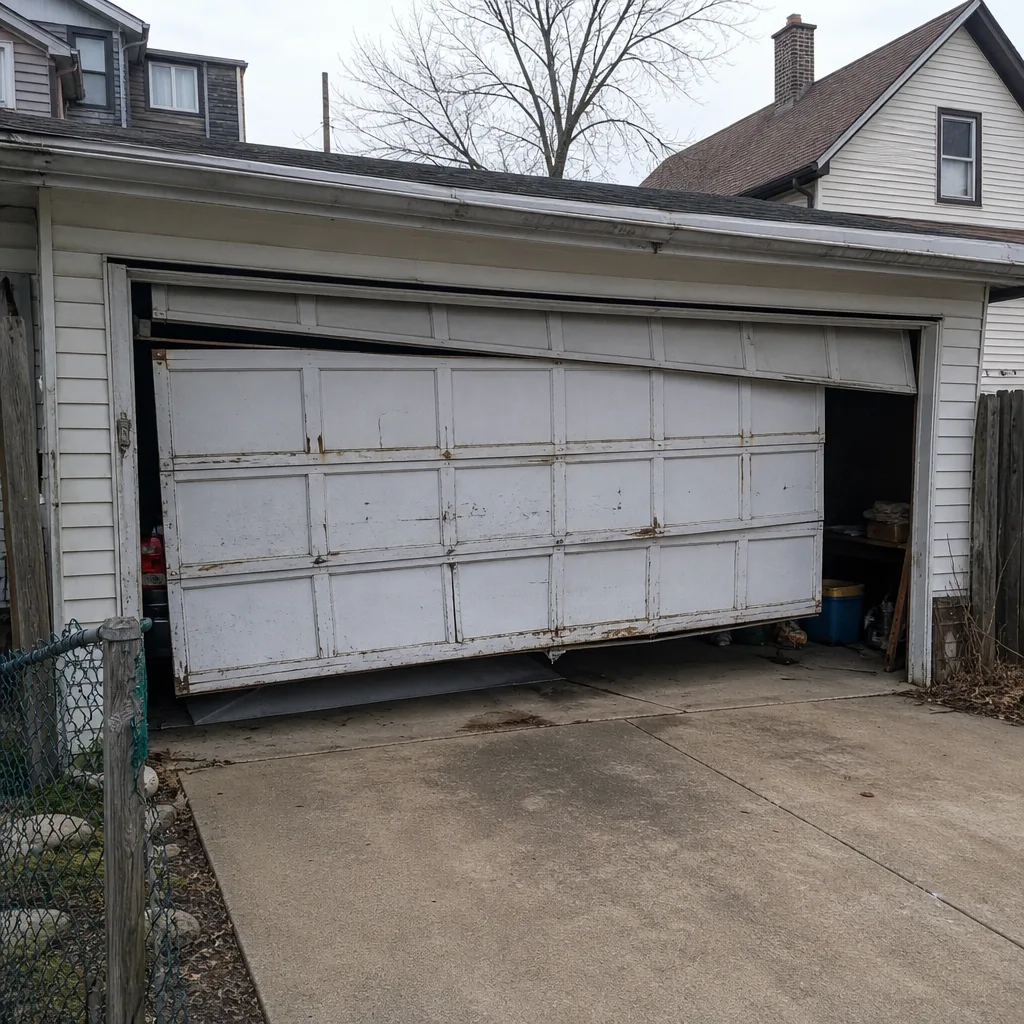 Before
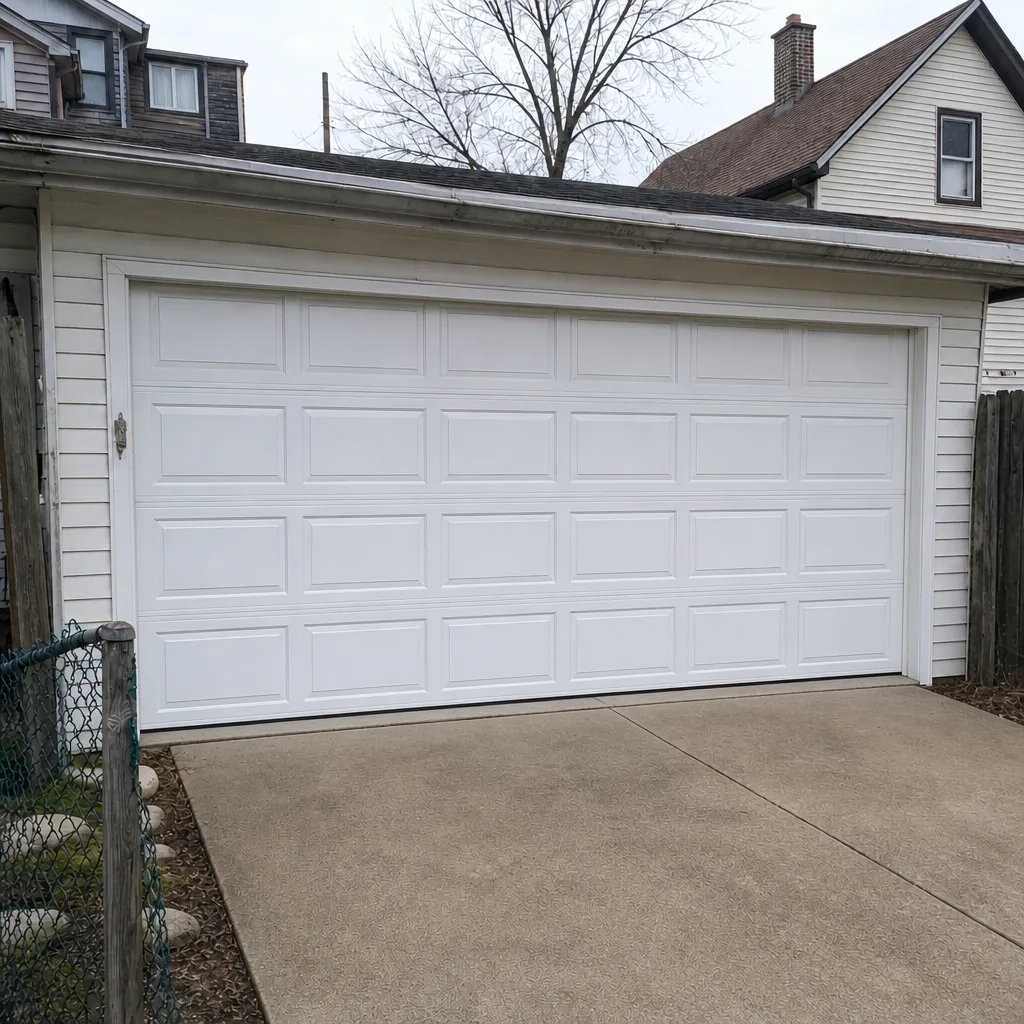 After
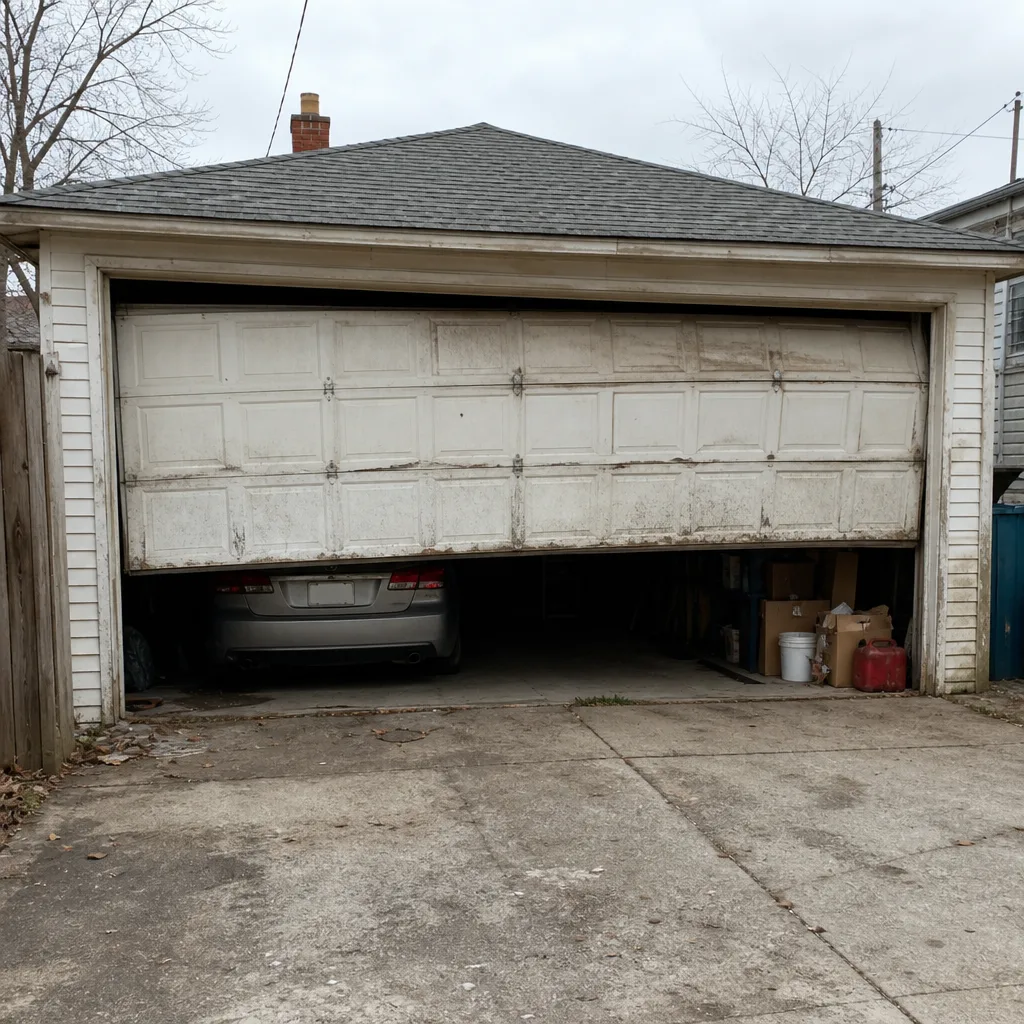 Before
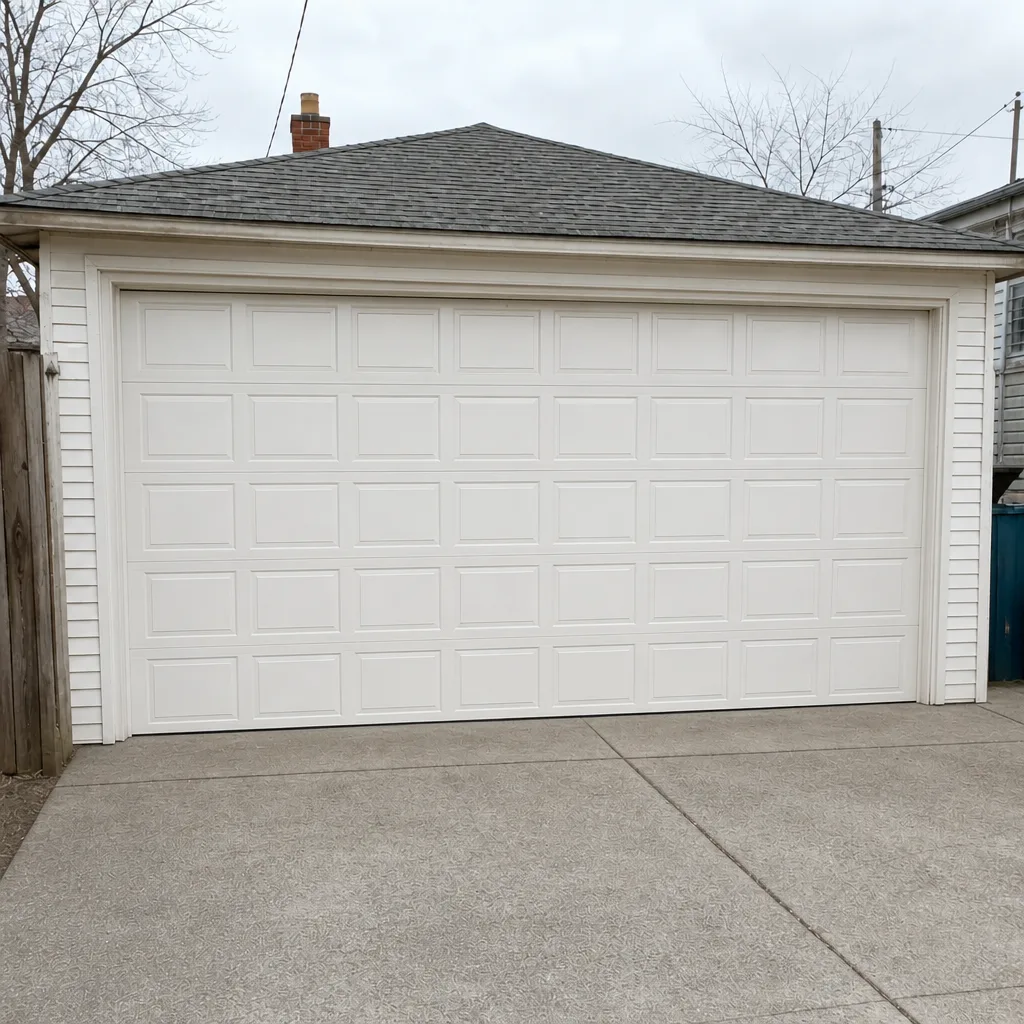 After
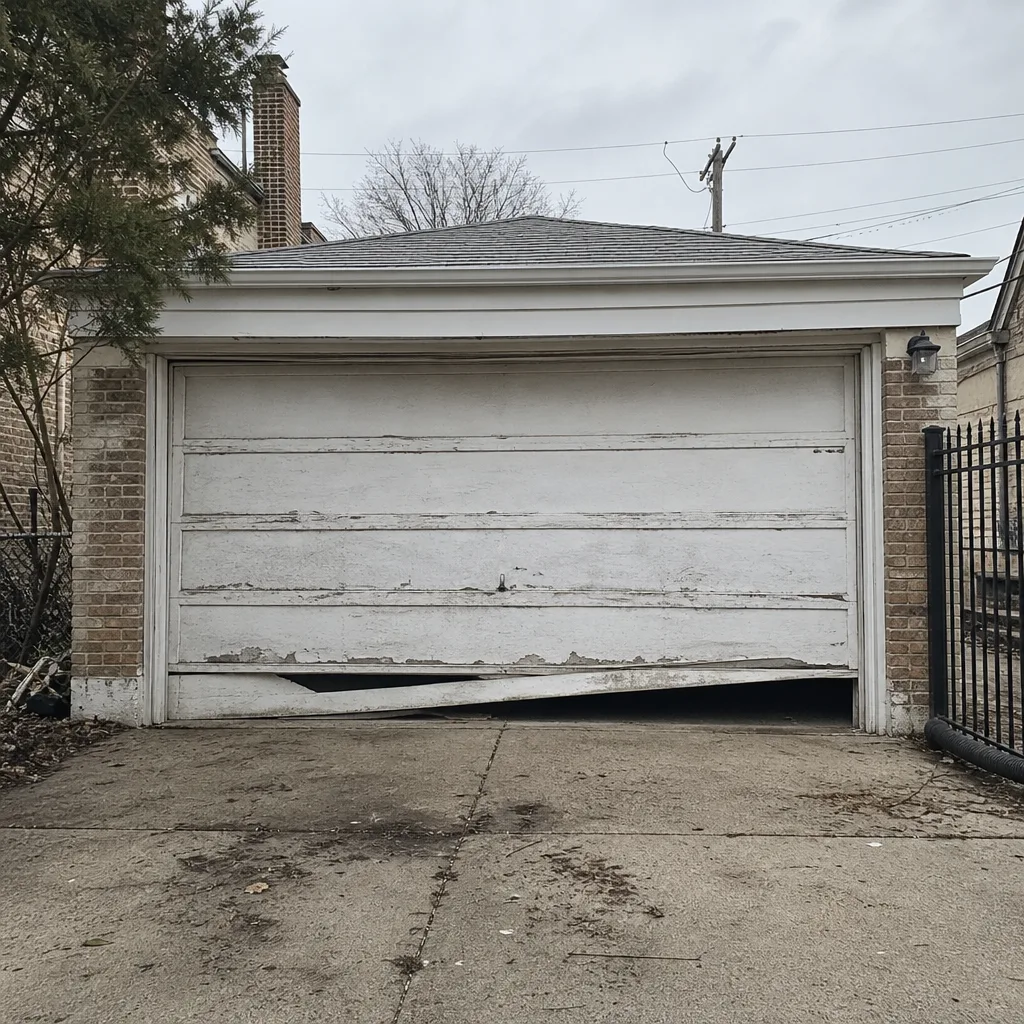 Before
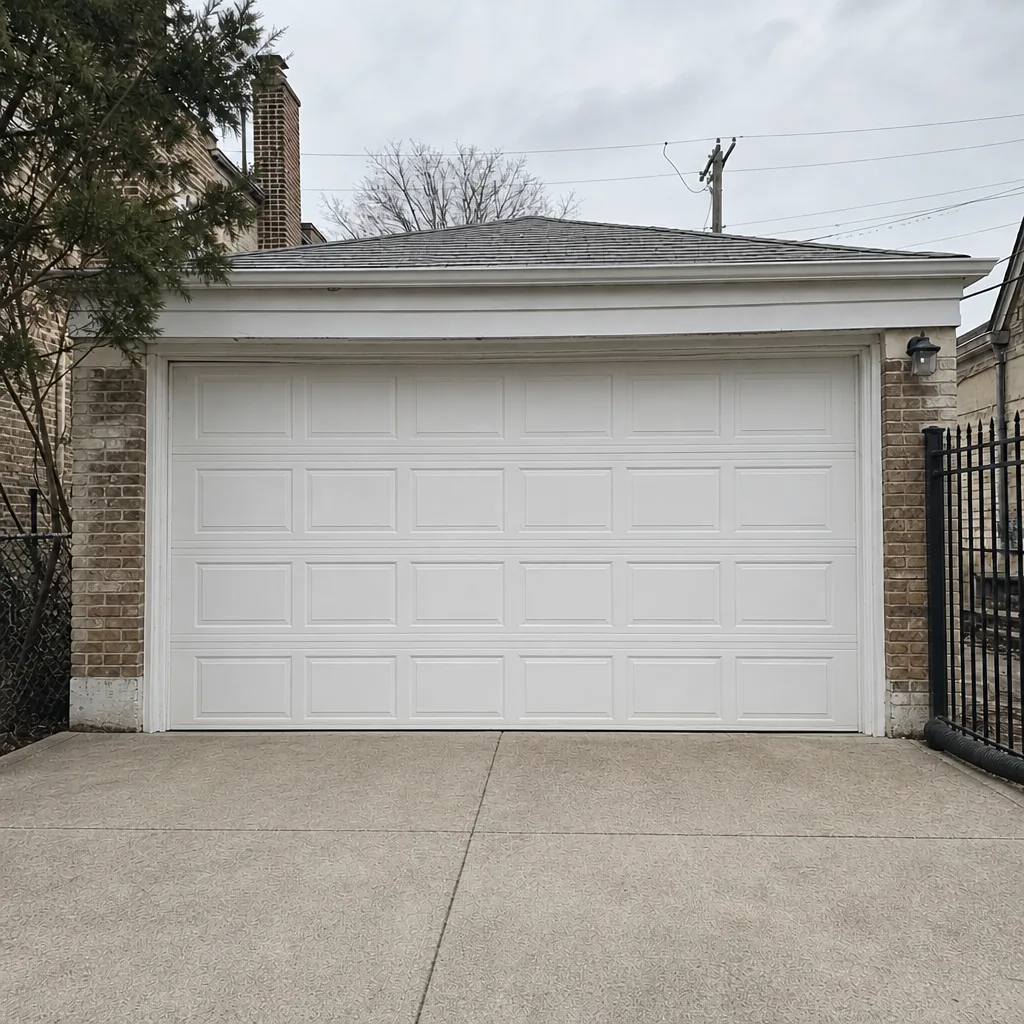 After
When to Call a Professional
Call a professional for anything involving springs, cables, or drums, and for any door that’s come off its tracks. Those are the jobs where the stored energy or the weight of the door can cause injury, and they’re the jobs where the right parts and training matter most. Call when the door reverses on close and the sensors are clean and the limit is adjusted, since that points to a sensor alignment or logic board fault. Call when the opener hums but doesn’t move the door, which usually means a capacitor or logic board. And call when the door stops partway, moves freely by hand, and the limits are correct, because that’s a board-level opener repair rather than an adjustment.
Garage Door Repair Logan Square offers free estimates in Logan Square. Call (866) 650-1667. We answer 24/7. Fast dispatch from 7am to 7pm, Sunday through Friday. The price is quoted and agreed before any work starts.
Frequently Asked Questions
It’s almost always a close-limit setting or a safety-sensor issue, not a spring or motor failure. Check that both sensor lenses have steady lights, wipe them clean, and adjust the close-limit screw in small increments until the door seats fully. If it still reverses after that, the sensor alignment or the opener’s logic board is the likely fault. Call (866) 650-1667 for an exact quote – estimates are free.
Pull the manual release cord and lift the door by hand. If it’s heavy, jerky, or won’t stay up, the problem is mechanical: springs, cables, tracks, or rollers. If it lifts easily and stays put, the door is fine and the problem is electrical: sensors, opener logic, wiring, or the wall button. That one test splits the diagnosis in under a minute.
No. Torsion and extension springs are under high tension and a spring that lets go can cause serious injury, so spring work should always be done by a trained technician. Our technicians have up to 13 years of experience, and spring repair is a core service for us rather than a footnote. Call (866) 650-1667 for an exact quote – estimates are free.
A door that stops at the same height every time usually has a travel-limit setting or a mechanical bind; a door that stops at random heights usually has a force or logic issue. Run the door by hand with the release pulled to separate the two, then check the open-limit screw. If the door moves freely and the limits are right, the opener’s logic board is the likely cause.
Logan Square’s older two-flats, three-flats, and coach houses often have non-standard header clearance and tighter overhead space, which changes which springs and openers fit and can make a track or clearance problem look like an opener failure. Mixed-age systems are common too, with an older opener on a newer door. Measuring the opening first is what separates a correct diagnosis from a parts-swap guess.
No. We quote and agree the price before any work starts, and the written estimate sets the final price. If the diagnosis changes what the door needs, we’ll re-quote before proceeding, never after. Call (866) 650-1667 for an exact quote – estimates are free.
The Bottom Line
The fastest way to solve a garage door problem is to name the category before you call anyone. A door that reverses is usually a sensor or limit; a door that won’t open is usually a spring or opener; a door that stops partway is usually a bind or a travel limit. The manual release cord separates mechanical from electrical in under a minute, and your door and opener brands tell a technician which parts to bring. Save the DIY for limits, sensors, and lubrication, and call a professional for anything under tension. If you’d rather we take it from here, Garage Door Repair Logan Square is one call away: (866) 650-1667. We answer 24/7. Fast dispatch from 7am to 7pm, Sunday through Friday.
Written by the team at Garage Door Repair Logan Square.