
Last updated November 21, 2026
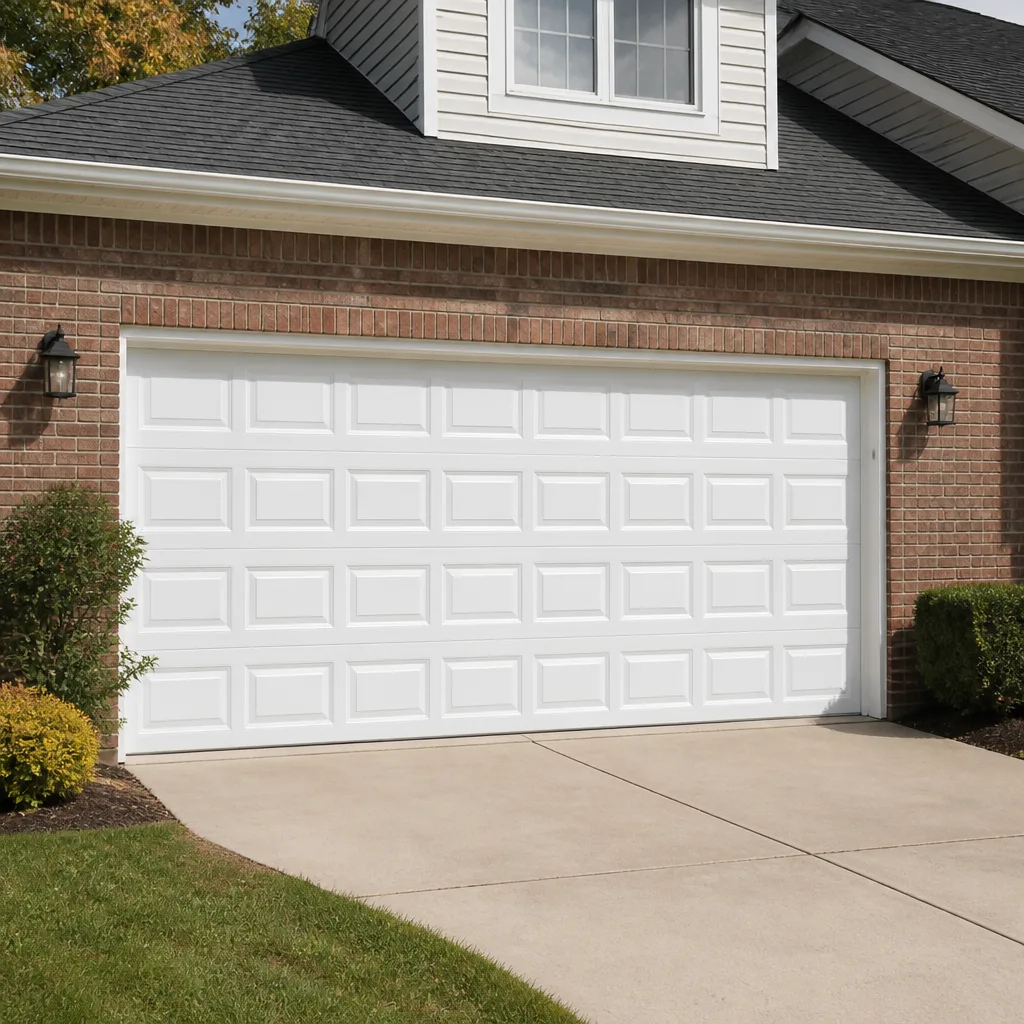 Raised-panel steel
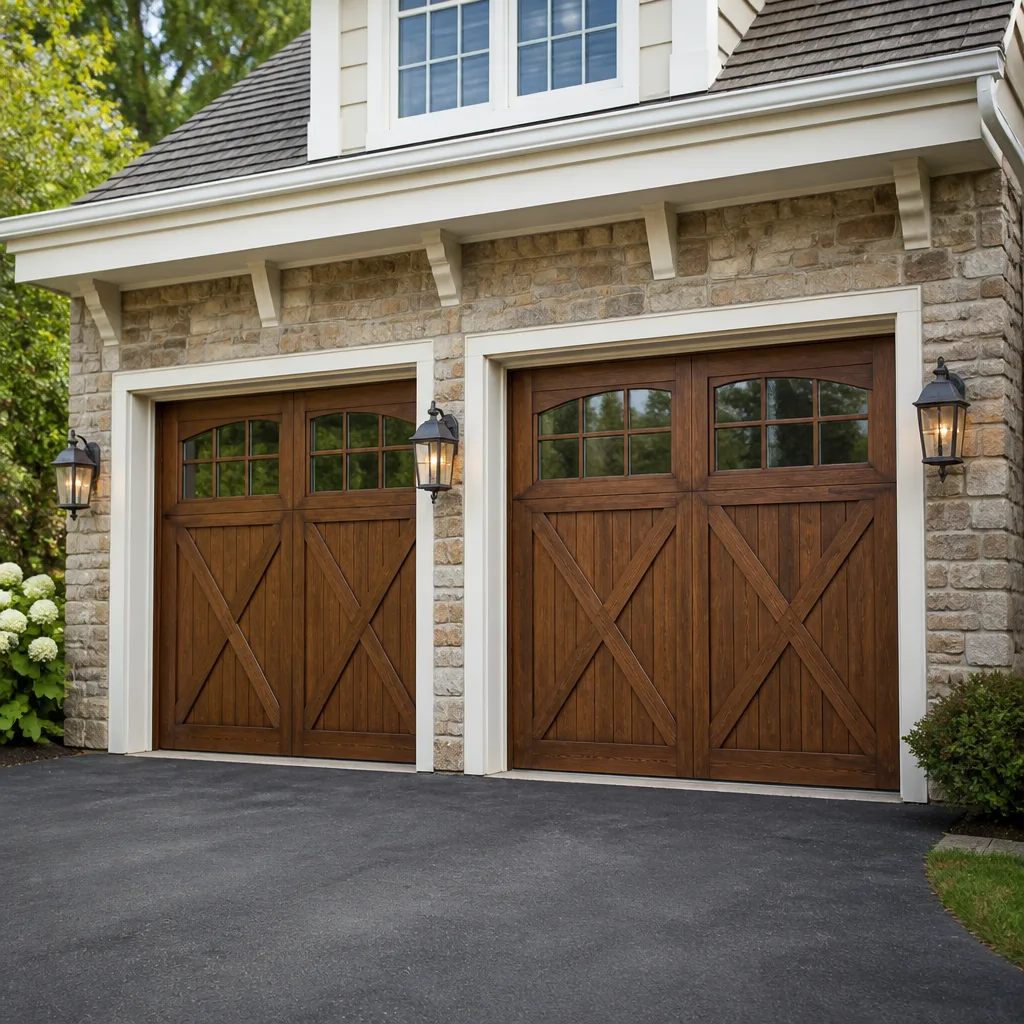 Carriage house
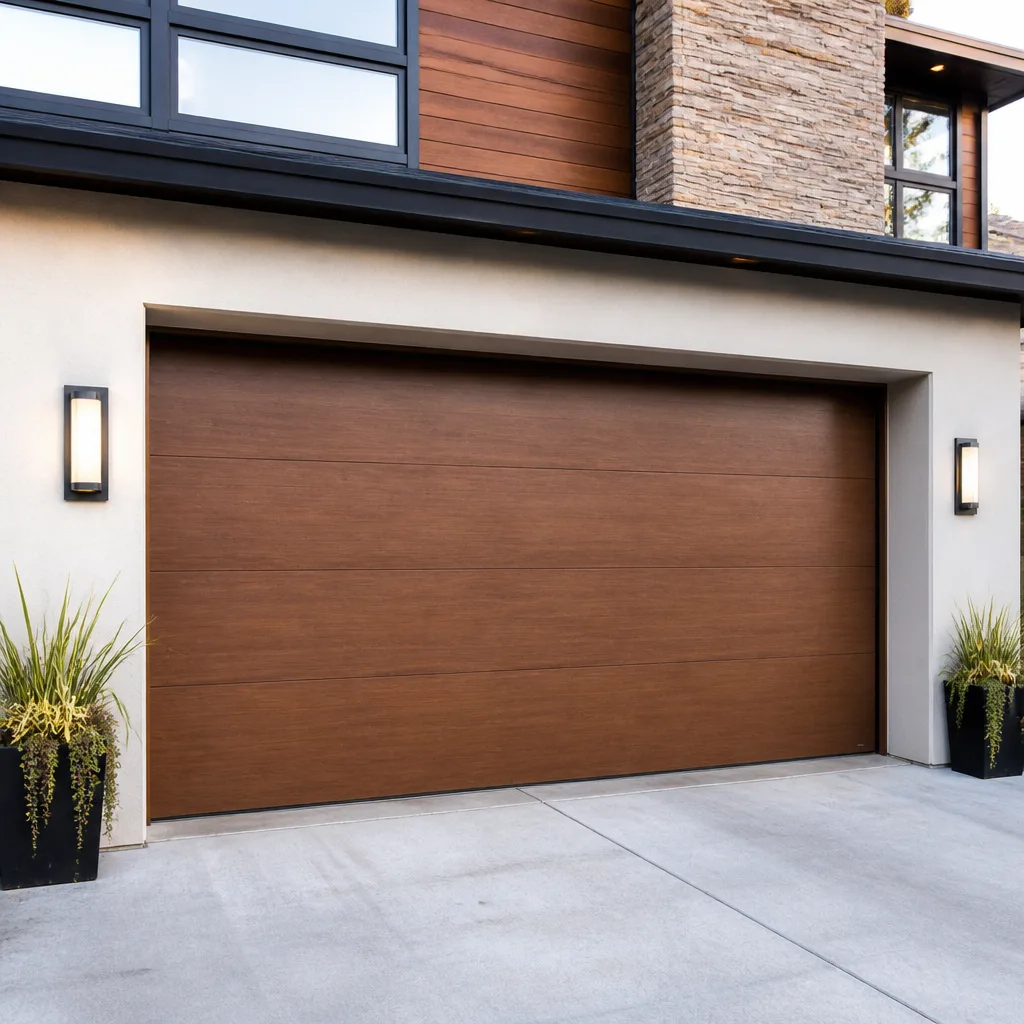 Modern flush
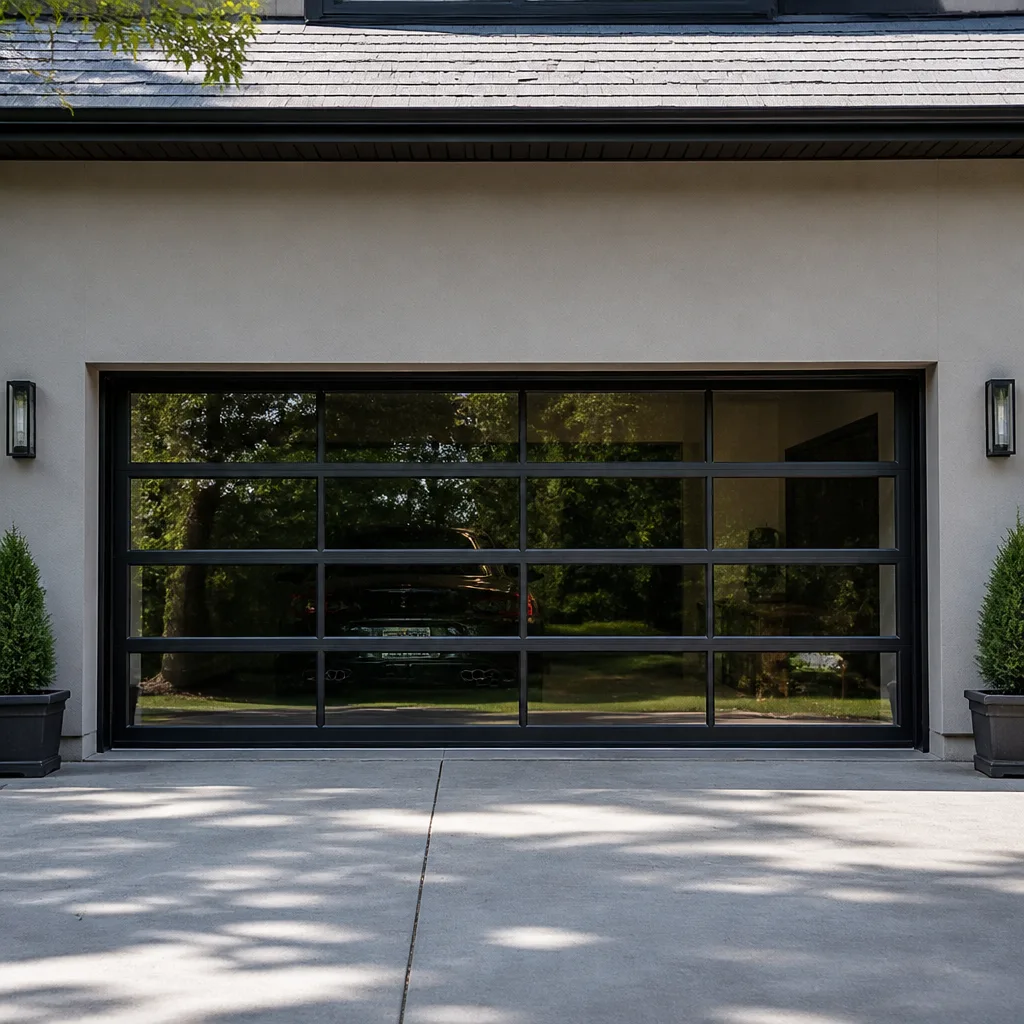 Full-view glass
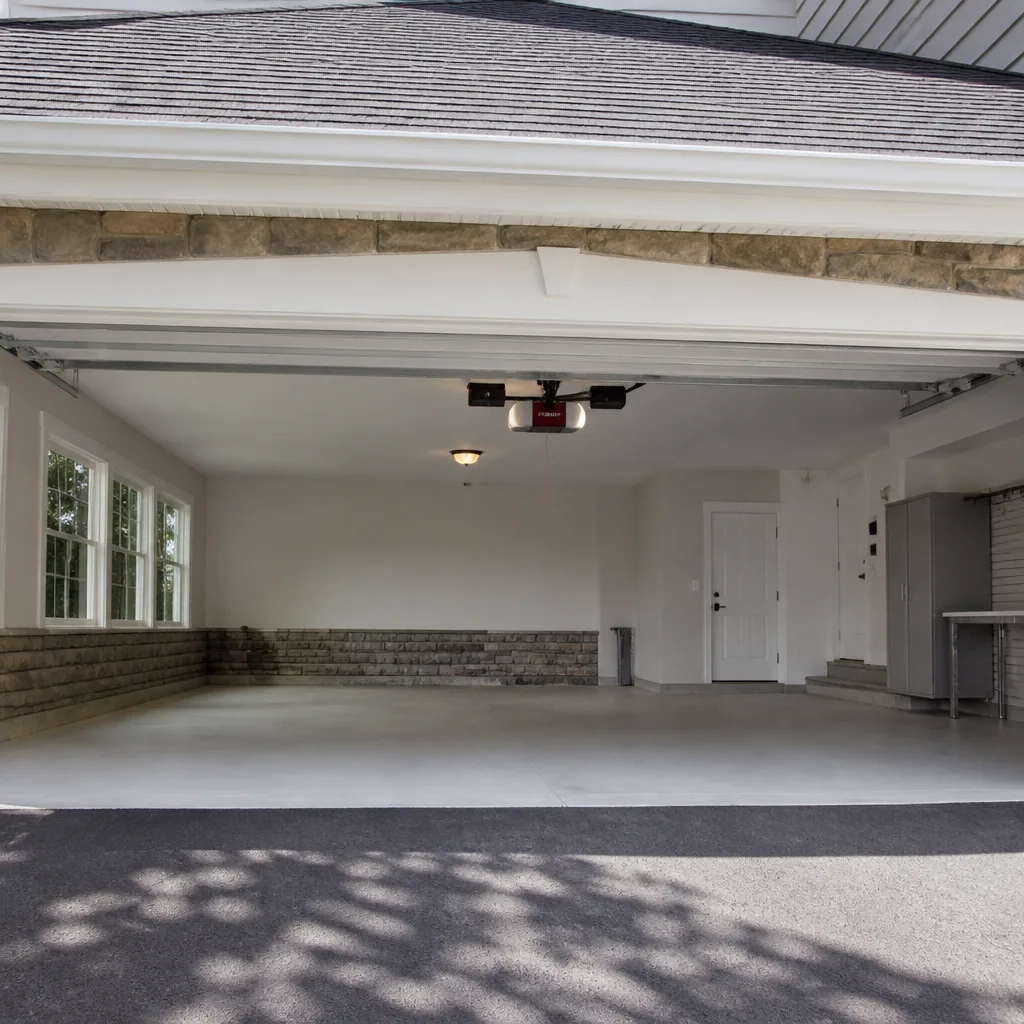 LiftMaster openers
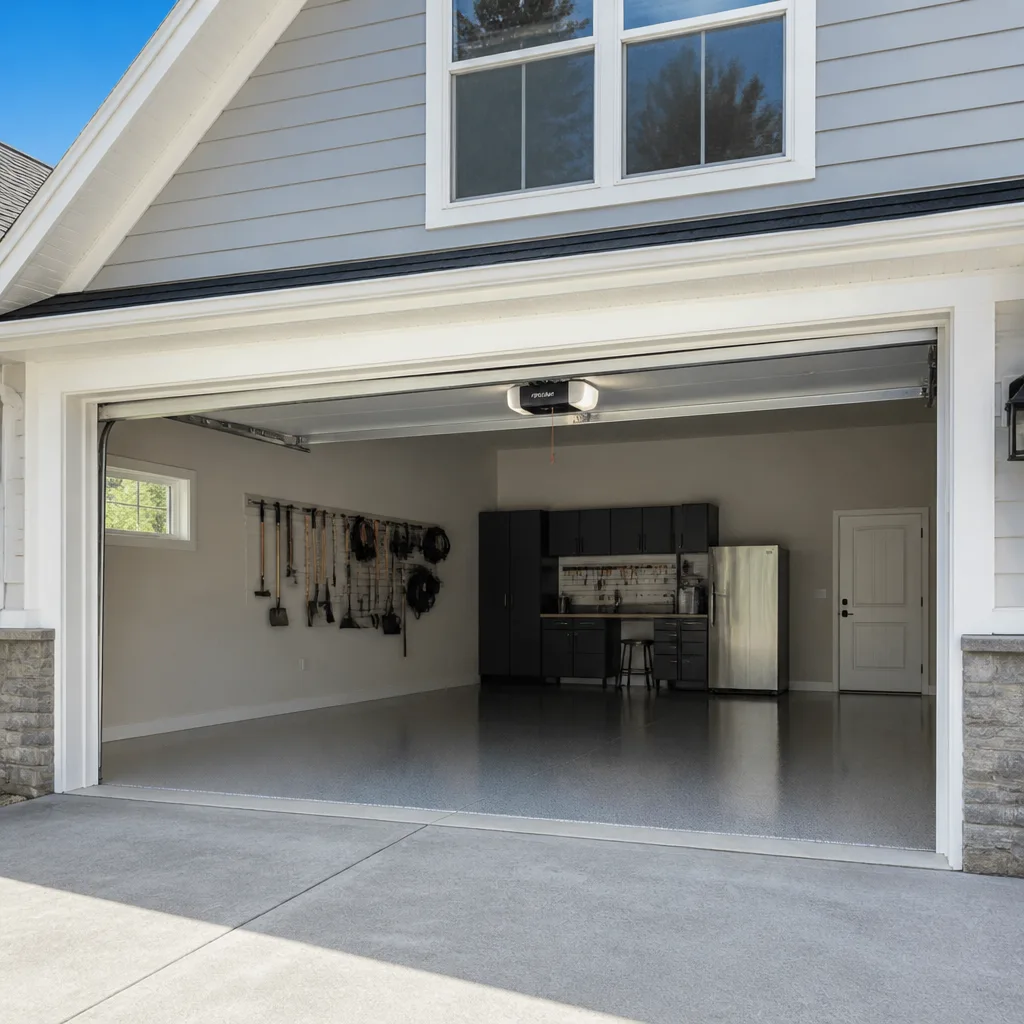 Chamberlain openers
Full 25-point door and opener safety check with every visit - springs, cables, rollers, tracks, and your LiftMaster or Chamberlain opener included
You get a price before we start. It does not change when the pro arrives.
Get your free estimateGarage Door Emergency Preparedness Guide for Logan Square Homes
If your torsion spring breaks at 7:45 a.m. on a Tuesday and your car is behind that door, you have exactly one safe option: the manual disconnect. If you don’t know where it is or how to use it without damaging the door further, you’re about to have a very expensive morning. Most Logan Square homeowners have never touched the red pull cord on their opener, and that’s the part that costs them. This guide walks through the three procedures worth learning before you need them: how to disconnect and lift a door with zero spring tension, how to secure an alley-facing door after a lock failure, and how to read a power outage on a battery-backup opener without stripping its drive gear. We’ll also cover who to call and in what order, and exactly what to tell a technician so the right parts arrive on the first visit.
Quick Answer
A garage door emergency in Logan Square usually means one of three things: a broken spring with a car trapped inside, a door that won’t close and leaves the alley exposed, or an opener that’s dead during an outage. For a broken spring, pull the red manual release cord and lift the door with two people – never alone, because a door with no counterbalance can weigh well over a hundred pounds. For security, drop the emergency release lock and engage the slide latch before you call. Then call a technician, describe what you see, and don’t force anything.
Styles & brands we work with
- Raised-panel steel
- Carriage house
- Modern flush
- Full-view glass
- LiftMaster openers
- Chamberlain openers
Table of Contents
- How Do You Use the Manual Disconnect on a Door With a Broken Spring?
- How Do You Secure an Alley-Facing Garage Door After a Break-In or Lock Failure?
- What’s the Power Outage Protocol for a Logan Square Garage?
- How Do You Sort an Emergency From an Urgent Repair?
- What Should You Tell the Technician When You Call?
- How Do You Prepare a Logan Square Garage Door for Winter?
- What Belongs in a Garage Door Emergency Kit?
How Do You Use the Manual Disconnect on a Door With a Broken Spring?
A manual disconnect lets you lift a garage door by hand when the opener can’t move it. On most residential doors, it’s a red cord or handle hanging from the trolley that rides along the opener rail. Pull it straight down toward the door, and the trolley releases from the door arm so the door travels free of the opener. The catch most people miss: once you disconnect a door with a broken spring, you’ve removed the only force that was holding it up besides the opener. The door becomes dead weight.
Here’s the safe sequence, in order:
- Get a second person. A single-car door with no spring tension is heavy, and a double door is heavier still. One person lifting alone risks losing grip and getting hit by a falling panel.
- Pull the red release cord straight down until the trolley clicks free. Don’t yank sideways; the release mechanism sits in a track.
- Lift from the bottom panel with both people on either side, using a slow, steady push. Let the door ride up the vertical tracks. Don’t shove.
- Prop the door open with a sturdy brace or a locking pliers clamped on the track above a roller before either person reaches for the car. Don’t let anyone walk under a raised door that isn’t braced.
- Move the car out, then lower the door the same way – controlled, two people, hand on the bottom panel until it’s fully closed.
If the door binds halfway up, stop. That binding is usually a bent track or a seized roller, and forcing it will kink a panel. We’ve seen this on wayne dalton sectional doors in the older two-flats along Palmer Square, where a door that hasn’t been lubed in years fights every inch. Call a professional rather than pushing through it. A broken torsion spring is high-tension hardware – if you can see the spring has snapped, don’t touch the shaft, the cable, or the winding cones. Those carry stored energy even when the door looks relaxed. For that specific repair, our garage door repair covers the full spring swap safely.
How Do You Secure an Alley-Facing Garage Door After a Break-In or Lock Failure?
Most Logan Square garages face an alley, and an alley-facing door that won’t lock is a security exposure that needs a stopgap before a repair can happen. The two tools to know are the emergency release lock and the slide latch. An emergency release lock is a keyed exterior cylinder wired to the release cord, so a would-be intruder can’t poke a coat hanger through the door and pull the cord to open it. A slide latch is a bolt that slides through the door track and locks a roller in place, so the door can’t be lifted even with the opener disengaged.
To temporarily secure a door that won’t lock:
- Engage the slide latch (or clamp a locking pliers on the track just above the bottom roller) to physically block the door from rising. This is your first move, before anything else.
- Disconnect the opener so no one can activate it remotely. A door locked at the track with a live opener will strain the motor on the next signal.
- Check the release cord for tampering. If someone has pulled it from outside, the trolley is disengaged and your opener has been doing nothing. Re-engage it once the door is closed and the latch is set.
- Install an emergency release lock if you don’t have one. It’s a low-cost part and closes the coat-hanger vulnerability permanently.
Once the door is physically held, call for a proper repair rather than relying on the latch as a permanent solution. A slide latch that becomes your only lock will eventually fail, and a door that’s been forced often needs a track realignment and a new lock bar before it will lock cleanly again. If the door panels are damaged from the attempt, our garage door installation team can quote a replacement panel or a full door. Keep a set of heavy-duty locking pliers in the kitchen or hall closet, not the garage – you can’t reach the garage if the door won’t open.
What’s the Power Outage Protocol for a Logan Square Garage?
When the power goes out, a garage door with a battery-backup opener can still run – but only if you activate the backup correctly. On most modern LiftMaster and Chamberlain units, the battery sits in a compartment on the opener head, and the unit switches to battery automatically once the backup is installed and charged. The door runs slower on battery, and you’ll usually hear a beep or see an indicator light. That’s normal, and it’s your cue to get the car out while you can.
Older LiftMaster units need a specific sequence, and getting it wrong is where people damage the opener:
- Don’t hold the wall button down to force the door during an outage. Holding it can strip the drive gear on older chain-drive models.
- Press the wall control once and let the opener complete its cycle on battery, even if it’s slow. Give it time.
- If there’s no battery backup, use the manual disconnect: pull the red cord, then lift with two people as described above.
- Re-engage the trolley only when the door is fully closed and the spring is intact. Re-engaging mid-travel can jam the trolley in the rail.
If your opener is a Craftsman or Genie unit from the 1990s or early 2000s, don’t expect battery backup – those units predate it, and the manual disconnect is your only option. If your opener won’t respond after the power comes back on, that’s typically a blown logic board or a failed capacitor, not a mystery. Our garage door opener repair handles both legacy and WiFi-enabled LiftMaster, Chamberlain, Genie, and Craftsman units. And if the outage was caused by a downed line in the alley, don’t touch the door until you’re sure the power is truly restored – a sudden surge can fire the opener’s circuit board.
How Do You Sort an Emergency From an Urgent Repair?
Not every garage door problem needs a call today, but some genuinely do. The dividing line comes down to three questions: is the car trapped, is the home exposed, and is the door in a position that could fall? If the answer to any of those is yes, it’s an emergency. If none of them applies, it’s urgent but schedulable.
Emergency – call now:
- Broken torsion spring with the car inside the garage.
- Door stuck halfway open or halfway closed, unable to move.
- Door that won’t close and leaves the alley entrance exposed.
- Cable snapped and hanging loose – this one carries injury risk, so don’t touch it.
- Opener running but the door not moving, with the car trapped.
Urgent – schedule within a day or two:
- Door operates but a panel is dented or cracked.
- Opener makes grinding noises but still moves the door.
- Remote works intermittently – often a battery or a signal issue.
- Weather seal torn, letting in water or cold.
Scheduled:
- Annual tune-up, lubrication, and roller inspection.
- Cosmetic panel replacement or a new paint finish.
- Opener upgrade to a smart-home model with WiFi and battery backup.
In Logan Square specifically, an untended door left open overnight in a dense block of two-flats and walk-ups is a bigger exposure than it would be on a wide suburban lot. Treat an exposed alley door as an emergency even if the mechanism is technically fine. The estimate is free and the price is set per job by the written quote, so there’s no penalty for asking questions.
What Should You Tell the Technician When You Call?
Five pieces of information turn a vague service call into a first-visit fix. When you call, tell the technician these five things and nothing else: what the door is doing, the door brand and rough age, the opener brand and model, the door size, and your address with the alley access note. That’s what gets the right parts on the first trip.
Here’s why each one matters:
- What the door is doing. “Won’t open” is not enough. Say whether the opener runs but the door doesn’t move, whether it moves two feet and reverses, or whether it’s dead altogether. Each points to a different failure – spring, travel limit, or logic board.
- Door brand. A Clopay or Amarr door uses different rollers, hinges, and panel profiles than a Wayne Dalton or a Craftsman door. Telling us the brand up front means we arrive with the right hardware.
- Opener brand and model. LiftMaster, Chamberlain, Genie, and Craftsman each have model-specific logic boards, travel modules, and remotes. A model number gets you a real ETA instead of a guess.
- Door size. A single-car door and a double-car door need different springs. The spring wire gauge and length are matched to the door’s weight, and we don’t carry a universal spring.
- Address and access. Most Logan Square garages are alley-loaded. Tell the technician which alley, which end of the block, and whether there’s a gate or a shared driveway to navigate.
One more thing worth adding: a photo of the spring, the opener label, or the panel damage. Text it or describe it, and you’ll get a far more accurate estimate before anyone leaves the shop. The written estimate always sets the final price – that’s not a guessing game.
How Do You Prepare a Logan Square Garage Door for Winter?
Chicago winters are hard on garage doors, and Logan Square’s mix of older houses and alley-facing garages gets hit twice: freeze-thaw cycles on the concrete apron, and cold that stiffens every moving part. The most common winter failure we see is a torsion spring that’s been running under-lubed finally snapping on the first real cold snap. Cold metal plus dry winding cones is a bad combination.
The winter prep list:
- Lubricate the springs, hinges, rollers, and track with a garage-door-rated lubricant (not WD-40) before the first hard freeze. A dry track and dry spring are where failures begin.
- Check the weather seal along the bottom and sides. A torn seal lets cold air and snowmelt in, which is a freeze risk on the floor and eventually a rust risk on the track.
- Clear the apron of snow and ice so the door doesn’t freeze to the ground. A door that’s frozen shut will fight the opener and can strip the gear.
- Test the safety reverse by placing a roll of paper towels in the door’s path. If it doesn’t reverse on contact, the sensors or limits need adjustment before winter.
- Book a tune-up before the busy season. A tune-up catches a worn spring, a frayed cable, or a failing roller before it becomes an emergency call in January.
For the install side, a door with a thermal break and insulated panels does more for a Logan Square garage than most people expect, especially on a garage that adjoins the house. If you’re weighing a replacement, our garage door installation team can walk through Clopay, Amarr, and Wayne Dalton options and match the door to your opening.
What Belongs in a Garage Door Emergency Kit?
A garage door emergency kit is small, cheap, and the difference between a controlled morning and a damaged door. Keep it somewhere reachable from inside the house – not in the garage, because you may not be able to get into the garage. The full kit fits in a shoebox.
- Heavy-duty locking pliers for clamping the track and holding a roller in place.
- A flashlight and spare batteries – outage protocol starts with seeing the opener.
- A printed card with the door brand, opener model, and our phone number on the fridge. When you’re panicking, you don’t want to hunt for a model number.
- A manual release lock installed on the door (not in the kit, but the same preparation).
- A garage-door-rated lubricant for the annual lube and a quick fix after a cold snap.
- A sturdy brace or a 2×4 cut to the height of your door opening to prop a raised door.
The prep extends to the opener. If you have an older Craftsman or Genie unit without battery backup, write down the model number now. If you have a LiftMaster or Chamberlain with a backup battery, check that the battery is installed and holding a charge – a dead backup is worse than none because it gives false confidence.
Common Mistakes to Avoid
- Lifting a disconnected door alone. A door with a broken spring and no counterbalance is dead weight, and a dropped panel can break a foot. Always lift with two people and lower the door under control.
- Holding the wall button to force a door during an outage. On older LiftMaster chain-drive units this strips the drive gear and turns a cheap fix into an opener replacement.
- Pulling the release cord while the door is open. If you disconnect the trolley with the door up, the door will slam down the moment you let go. Disconnect only with the door fully closed.
- Trusting the slide latch as a permanent lock. A slide latch or a locking pliers is a stopgap. A door with a failed lock needs a real repair before the latch fails under load.
- Forcing a binding door. A door that binds halfway up usually has a bent track or a seized roller along the alley-side rail, which is common on older Logan Square garages that take a lot of weather. Forcing it kinks a panel and adds hundreds to the bill.
- Skipping the annual lube. Dry springs and dry tracks are where winter failures start. A ten-minute lube in fall prevents most January emergency calls.
- Calling without the model number. A vague “my door is broken” call gets a general ETA. A call with the door brand, opener model, and door size gets the right parts on the first trip.
See the difference
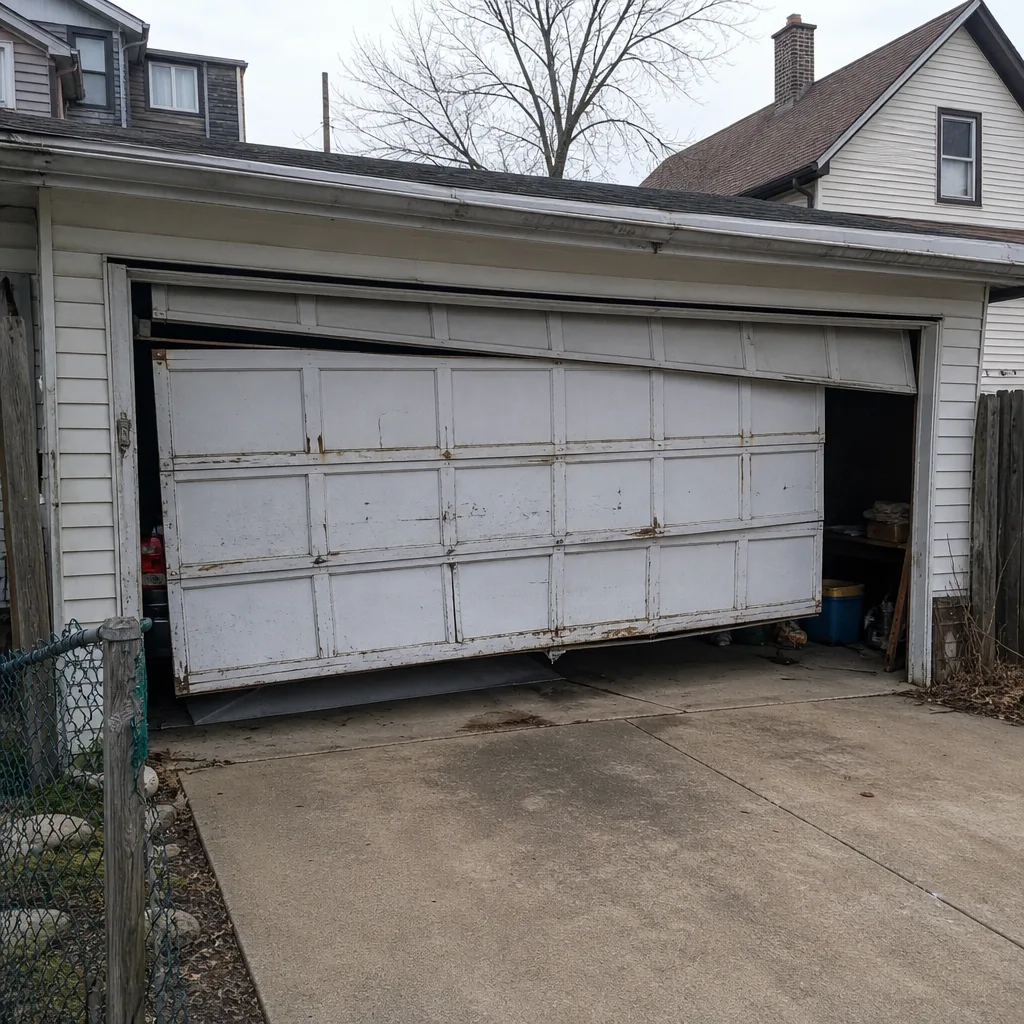 Before
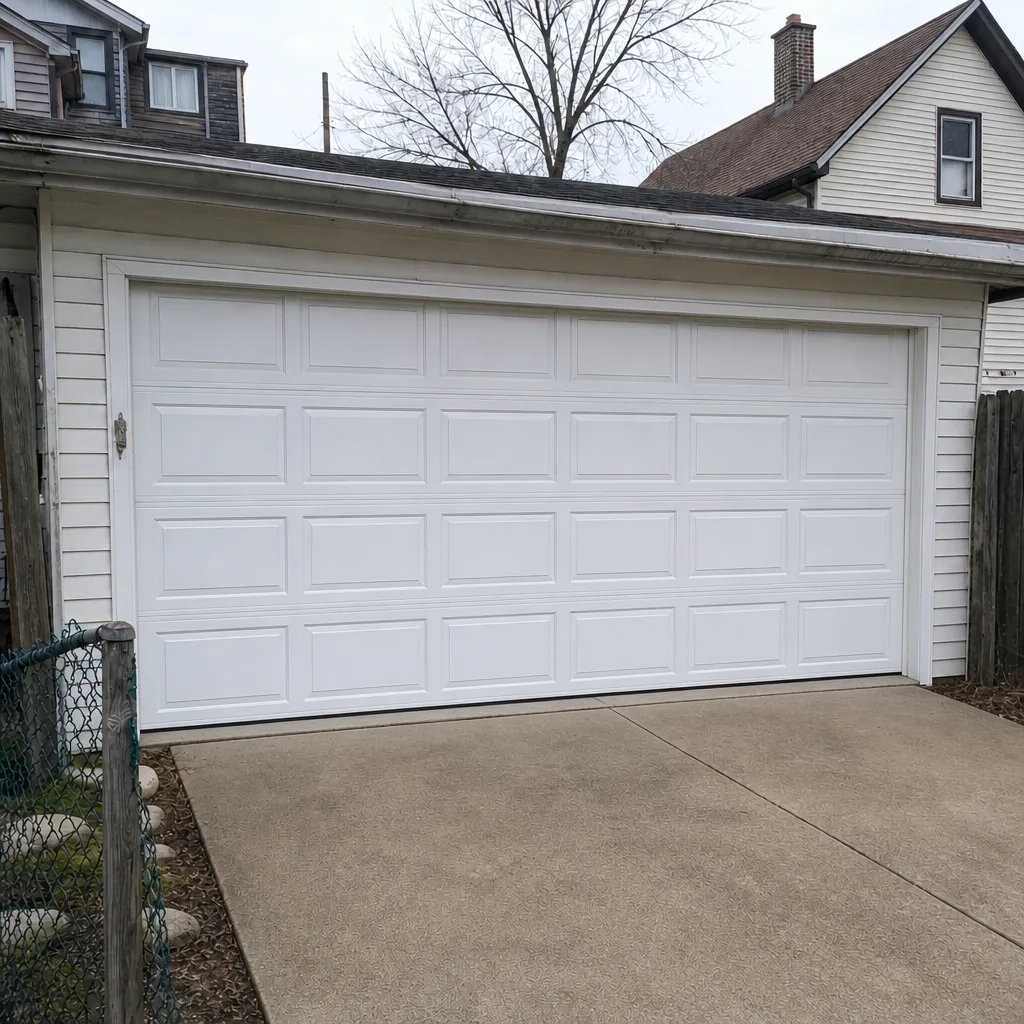 After
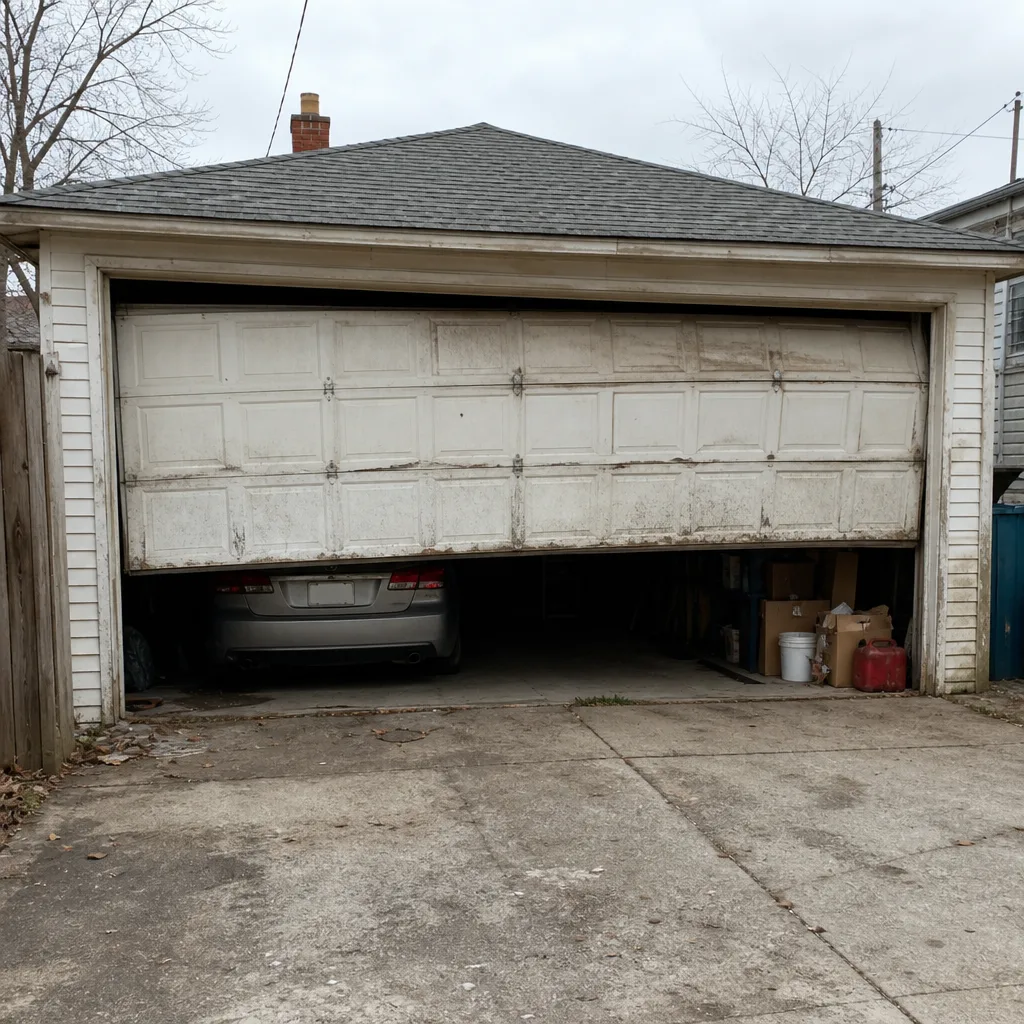 Before
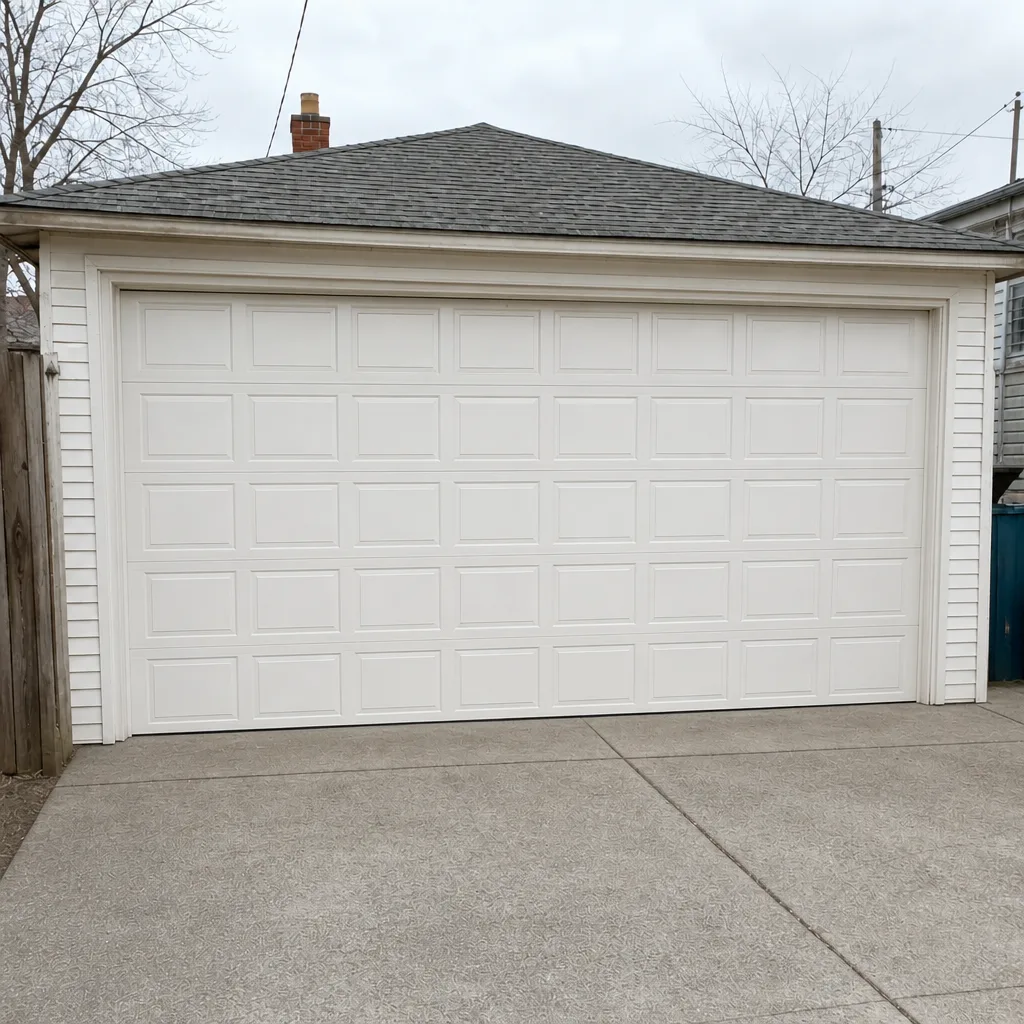 After
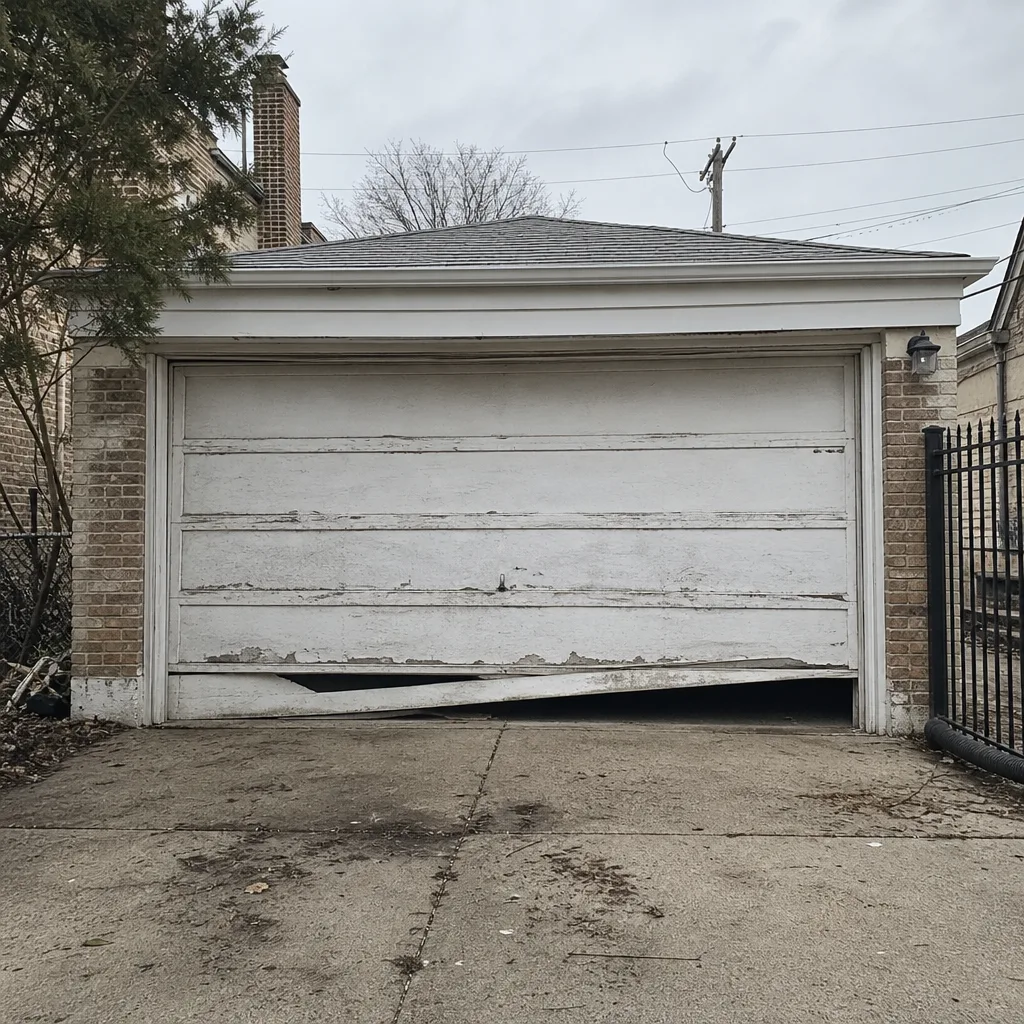 Before
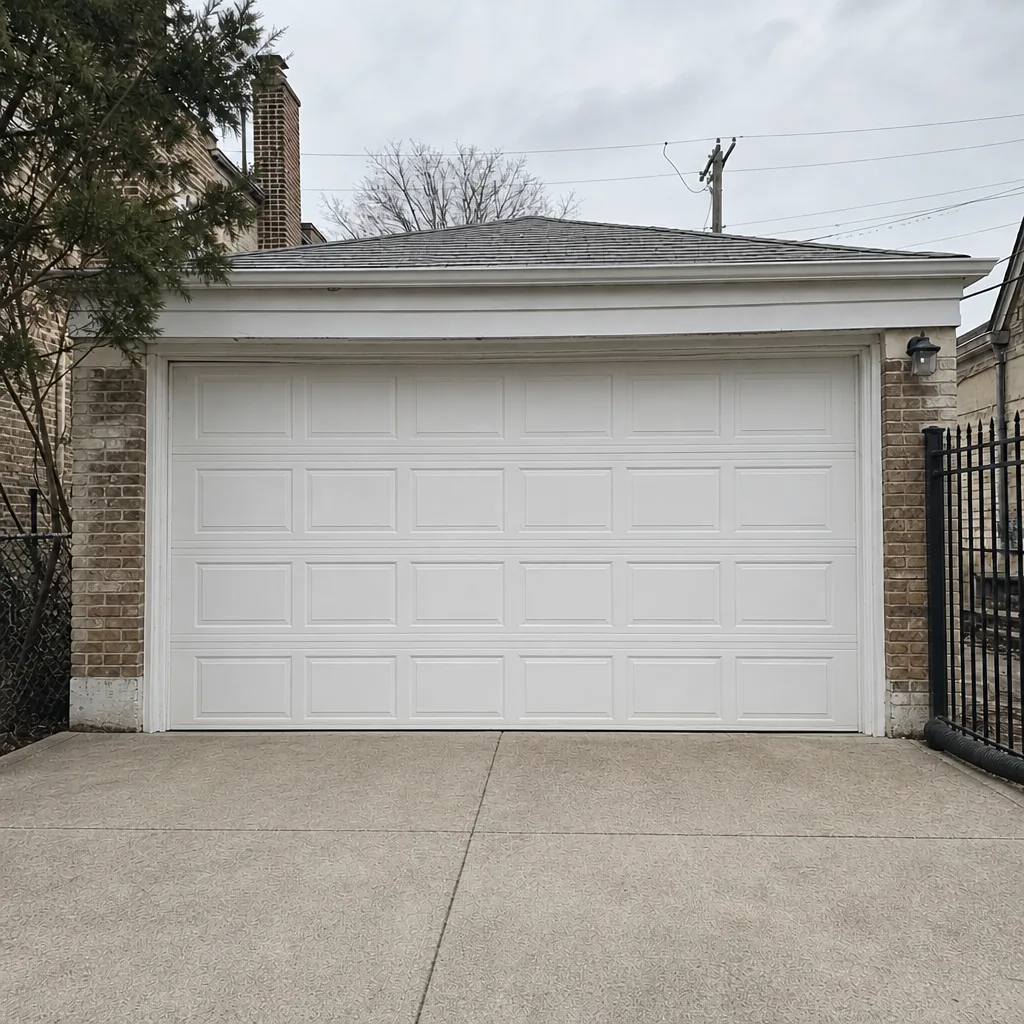 After
When to Call a Professional
Call a professional the moment a spring snaps, a cable lets go, or a door is stuck in a position that leaves the home exposed. Those are the calls we take every day in Logan Square, and they’re not DIY jobs. Torsion springs, cables, and winding cones store serious energy, and a door that’s misadjusted can fall or reverse unexpectedly. Our technicians have up to 13 years of experience with high-tension hardware, and we service LiftMaster, Chamberlain, Genie, Clopay, Amarr, Wayne Dalton, Craftsman, and Raynor – so we work on the brand you already own rather than telling you to replace it. Springs, openers, panels, and full installs: one call covers it. Garage Door Repair Logan Square offers free estimates in Logan Square. Call (866) 650-1667. We answer 24/7. Fast dispatch from 7am to 7pm, Sunday through Friday. If a door fails on a Saturday, call and we’ll book it for Sunday.
Frequently Asked Questions
Yes, but only with two people and only after you pull the manual release cord with the door fully closed. A door with a broken spring has no counterbalance, so it’s extremely heavy and will fall if you let go. Lift slowly from the bottom panel, brace the door open before reaching for the car, and never walk under a raised door that isn’t braced. If the door binds on the way up, stop and call a technician – forcing it can kink a panel or bend the track.
Engage the slide latch or clamp a locking pliers on the track just above the bottom roller to physically block the door from rising, then disconnect the opener so no one can activate it remotely. Check the release cord for tampering – if it’s been pulled from the outside, the trolley is disengaged and the opener has been doing nothing. Install an emergency release lock to close the coat-hanger vulnerability permanently, and call for a proper repair rather than relying on the latch long-term. In a dense Logan Square block of alley-facing garages, an exposed door is a real security exposure, so treat it as urgent.
A power surge can blow the logic board or a capacitor on the opener, especially on an older Craftsman or Genie unit. If the door won’t respond after the power is restored, don’t hold the wall button down – that can strip the drive gear on older chain-drive models. Check the breaker first, then look for an indicator light on the opener head. If there’s no light, the board is likely the issue, and that’s an opener repair, not a door repair.
If a car is trapped inside the garage, yes – call a technician, because a broken torsion spring requires high-tension repair that no homeowner should attempt. The spring stores enough energy to cause serious injury. If the car isn’t trapped and the door is fully closed, it’s urgent rather than an emergency: schedule it, but don’t force the door open and don’t touch the spring, cable, or winding cone in the meantime.
Give the technician five things: what the door is doing, the door brand, the opener brand and model, the door size, and your address with an alley-access note. Add a photo of the spring or opener label if you can. That gets you an accurate ETA and ensures the technician arrives with the right parts instead of making a second trip. Most Logan Square garages are alley-loaded, so telling us which alley and which end of the block saves time.
There’s no flat emergency rate – the price is set per job by the written estimate, and it’s quoted and agreed before any work starts. Spring, opener, cable, and track repairs each carry different parts and labor, and the written estimate the technician gives you is the final price. Call (866) 650-1667 for an exact quote – estimates are free. We answer 24/7, with fast dispatch from 7am to 7pm, Sunday through Friday.
The Bottom Line
The difference between a garage door emergency that costs you a morning and one that costs you a door comes down to preparation. Know where your manual release cord is and how to use it with a second person. Keep locking pliers somewhere you can reach when the door won’t open. Install an emergency release lock if you don’t have one. Write down your door brand and opener model now, so when you call, you can give a technician the five facts that get the right parts on the first visit. And respect the spring – it’s the most dangerous part on the door, and it’s the one repair a professional should always handle. For the broader repair picture in Logan Square, see our garage door repair Logan Square guide.
Need help now? Call (866) 650-1667 for a free estimate. We answer 24/7. Fast dispatch from 7am to 7pm, Sunday through Friday.
Written by the team at Garage Door Repair Logan Square.